Guide - Wild and Trek
Wild and trek Japan by season: volcanoes, whales, trails, Fuji
What to do outdoors in Japan each season, with the rules that decide it: volcano checks, whale boats, beaches, trail bookings, Fuji, Alps huts and bears.
Japan’s wild side runs on short, regulated seasons: snow monkeys, drift ice and humpback whales in winter, the Fuji climb and the beaches in summer, and the Yarigatake huts from late April to early November. Each has an opening date, a closing date and a rule that can stop you at the gate.
This guide covers volcanoes, whales, beaches, wildlife, hiking tracks, climbing and bear safety. Dates are the 2026 season. Most 2027 dates are not published, so 2026 is the last known season.
Dollar figures use about ¥155 to US$1 and are rounded; you pay in yen, so check the rate.
Which season suits which activity?
Winter is the animal season, summer is the climbing and swimming season, and the shoulder months decide what is still open. All dates below are 2026.
| Season | What to do | Where | Rules to know |
|---|---|---|---|
| Winter | Snow monkeys; drift ice cruises (Feb to early Mar); humpback whales; tancho courtship dance (Feb to Mar); Kumano Kodo Nakahechi | Jigokudani; Rausu; Zamami and Ogasawara; Kushiro Shitsugen; Kii Peninsula | Online ticket holders enter Jigokudani first, Dec to Apr; Kohechi route closed; Tateyama Kurobe route closed Dec to mid-Apr; Toyama climbing plan from 1 Dec |
| Spring | Okinawa beaches open; last Ogasawara humpbacks; orcas at Rausu (Apr to Jul); Mikurajima dolphin swim (from mid-Apr); Kumano Kodo and Shikoku Henro | Okinawa; Ogasawara; Rausu; Mikurajima; Kii Peninsula and Shikoku | Book Kumano lodging about 6 months ahead; Mikurajima needs lodging first; habu advisory 1 May to 30 Jun |
| Summer | Fuji climb; Shonan, Kamakura and Shimoda beaches; Alps huts; sperm whales at Rausu (Jul to Sep); Ogasawara dolphins | Fuji; Fujisawa, Kamakura, Shimoda; Northern Alps; Rausu; Ogasawara | Fuji fee and 14:00 gate; jellyfish nets in Okinawa; hut bookings open a month ahead; Nagano climbing-plan filing |
| Autumn | Ogasawara sperm whales (to Oct); Kumano Kodo and Shikoku Henro; last weeks at Kamikochi and on the Tateyama Kurobe route | Ogasawara; Kii Peninsula and Shikoku; Northern Alps | Fuji closed after 10 Sep; Yarigatake Sanso closed 3 Nov; Kamikochi closes mid-Nov; Tateyama Kurobe route closed after 30 Nov |
Volcanoes: how do you check before you go?
Check the Japan Meteorological Agency (JMA) on the day you travel, because alert levels change during a season.
JMA uses five levels. Level 1: remember the volcano is active. Level 2: do not approach the crater area. Level 3: do not approach the volcano; entry is restricted. Level 4: prepare to evacuate. Level 5: evacuate. This wording follows a secondary reproduction of the JMA table, as the official English table page was not reachable. Levels move: Aso rose from Level 1 to Level 3 between June and August 2026, per a news report (secondary). JMA’s English warnings map shows the levels, and its eruption notices and ash-fall forecasts are for people entering volcanic areas.
Before you go Open the JMA volcano page and warnings map on the day, then ask the local operator or visitor centre. Do not rely on any level printed in a guide, including this one.
Sakurajima. Entry is legally barred within 2 km of the Minamidake and Showa craters, per Kagoshima City. The Sakurajima Visitor Center’s site streams live crater footage, and the island has boulder shelters and evacuation houses.
Hakone. The Owakudani ropeway measures sulphur dioxide (SO2) constantly. Below 0.2 ppm is normal, 0.2 ppm and above brings a caution, and 5.0 ppm and above suspends service; the operator says all lines may be suspended. It bars people with asthma, respiratory or heart disease or a pacemaker, pregnant women, infants and elderly passengers from boarding the Sounzan to Ubako section. A Hakone transport notice, as summarised in search results, lists suspensions of Owakudani to Sounzan from 7 to 24 December 2026 and of Togendai to Ubako to Owakudani from 12 January to 26 February 2027, with replacement buses; the operator’s own page lists no dates.
Aso. Aso City says that while Level 2 is in force, entry within about 1 km of the Nakadake crater is banned and crater viewing is closed. No official check-before-go page was found, so use the JMA map. Closures, shelters and visitor centres for Asama, Kirishima, Unzen, Zao, Tokachidake, Tateyama and Usu are not confirmed.
Fuji’s rules sit in the climbing section. Levels are explained on Volcano alert levels, and access by volcano on Visit active volcanoes.
Whales: which month, which coast?
Humpbacks show from January to March off Zamami and from February to April off Ogasawara, Rausu has orcas from April and sperm whales from July, and Ogasawara’s sperm whales peak from late August to October.
| Place | Species and months | Rules to know |
|---|---|---|
| Rausu | Orca Apr to Jul; sperm whale Jul to Sep; Baird's beaked whale Feb to Oct; minke whales present | Cruises leave Rausu Port from late Apr to Oct; sperm whales are rarely seen from land |
| Zamami | Humpback, 8 Jan to 25 Mar in 2026 | Boats stay at least 100 m away |
| Ogasawara | Humpback Feb to Apr; sperm whale late Aug to Oct; dolphins all year, best Jun to Oct | 100 m from humpbacks, 50 m from sperm whales |
| Mikurajima | Dolphin swim, mid-Apr to mid-Nov | Lodging first; swim slots by lottery |
Rausu. Shore viewing works at Whale Observation Hill Park and the Rusa Field House. Check Rausu Town’s tourism site for the current cruise schedule. Winter cruises are for ice: see Shiretoko drift ice.
Zamami. The Zamami Whale Watching Association’s page shows the 2026 humpback season as 8 January to 25 March; an older English page shows 27 December to 5 April, undated. The 2026-27 dates are unclear right now: check the association’s page before you book. One Naha operator’s listing shows 19 December 2026 to 4 April 2027, which is that operator’s season, not the association’s. Boats keep at least 100 m away, avoid sudden turns and stay with a mother and calf for about an hour at most.
Ogasawara. The Ogasawara Maru takes about 24 hours from Takeshiba in Tokyo to Chichijima and sailed about once a week in September 2026, so a long weekend does not fit. Adult one-way fares that month ran from $205 (¥31,450) in economy to $605 (¥93,700) for a suite, and they change monthly. Off-peak tickets go on sale two months ahead.
The Ogasawara Whale Watching Association’s voluntary rules also ask boats to go slowly within 300 m and aircraft and drones to keep at least 300 m away; a drone must land if animals change behaviour. Dolphin swims are never guaranteed: rules limit boats per group and approaches per boat, and sea state and the dolphins’ mood decide the rest.
Mikurajima. The dolphin swim runs mid-April to mid-November with about 160 resident dolphins, per the Tokyo Metropolitan tourism site. Book lodging first: entry without it is prohibited, and there are no day trips. Swim slots go by lottery 2 to 3 months ahead.
Month-by-month detail is on Whale watching by month.
Beaches: when can you swim?
Okinawa’s beaches open from March and swimming runs to about the end of October, while the mainland beaches in Shonan, Kamakura and Shimoda open in July and close between late August and mid-September.
| Area | 2026 swim dates | Detail |
|---|---|---|
| Okinawa | Openings 5 Mar to 18 Apr; swimming to about end Oct | Kariyushi (Nago) 5 Mar to 31 Oct; Manza (Onna) and Ishigaki Maezato 14 Mar; Emerald (Motobu) 1 Apr to 31 Oct; Naha Naminoue and Miyako Yonaha Maehama 5 Apr; Minna-nu-hama 1 Jul to 30 Sep |
| Fujisawa | 1 Jul to 13 Sep | Katase Higashihama to 6 Sep; Katase Nishihama and Kugenuma to 13 Sep; Tsujido 18 Jul to 31 Aug |
| Kamakura | 1 Jul to 31 Aug | Zaimokuza, Yuigahama and Koshigoe, 09:00 to 17:00 |
| Shimoda | From 18 Jul | Nine beaches open from 18 Jul; Shirahama Chuo to 30 Aug, 08:00 to 16:00; Irita and Tatado to 23 Aug |
These are the last known (2026) dates.
Tattoos. The Japan National Tourism Organization (JNTO) says the policy is set per facility. Ask the beach operator or facility before you go.
Jellyfish. In Okinawa, swim inside the box jellyfish nets. A tourism notice of 4 July 2026 calls swimming without nets very dangerous and reports frequent stings and man-o’-war emergency transports. The advisory ran from 1 June to 30 September in 2025; the 2026 period is not confirmed. Cover your skin with a rash guard and leggings. For a sting, a news report (secondary) on the prefecture’s advice says to pour vinegar generously, remove tentacles, cool the area and not scratch; vinegar is wrong for some other jellyfish, such as the Portuguese man-o’-war. It gives 118 for the Coast Guard at sea and 119 for an ambulance.
Typhoons. JMA publishes typhoon approach counts back to 1951; monthly averages are not in our sources, so no typhoon months are given. Lifeguard hours, rip currents and the flag system were not retrieved. Swim dates by region are on Beaches by region.
Flora and fauna: what can you see, and under what rules?
JNTO’s national parks guide maps each signature animal to a park: macaques at Jigokudani, tancho cranes at Kushiro Shitsugen, the Iriomote cat on Iriomote, serow across Honshu and deer in Shiretoko and Daisetsuzan. The rules differ by animal.
- Snow monkeys. Jigokudani lies in Joshin’etsukogen National Park. The monkeys live in snow for about a third of the year, and from December to April online ticket holders enter first. Sightings are not guaranteed: see Snow monkeys.
- Tancho cranes. Kushiro Shitsugen is the park, and the courtship dance runs February to March.
- Blakiston’s fish owl. Rausu has several viewing points, and sightings are not guaranteed. Owls appear around sunset in November and around 1 a.m. in the February to March breeding season, per the tourism ministry’s database, which lists no viewing rules. Ask at the Michi-no-Eki Rausu desk.
- Iriomote cat. Nocturnal, about 100 adults, mostly crossing roads after sunset. Okinawa Prefecture’s rules: do not speed, feed or chase animals; no flash or bright light on nocturnal animals; collect nothing; no pets or non-native species; no off-road driving on forest roads, trails, fields or beaches. Report an injured cat to the Iriomote Wildlife Center hotline.
- Amami rabbit. For night viewing at Santaro Pass, the tourism ministry’s database says to book online, expect a limit on cars, drive at 10 km/h, use one spotlight per car with dimmed high beams, give way uphill, and stay still and silent if you see a rabbit. A guide is strongly recommended.
- Japanese serow. The central Nagano mountains are the easiest place to see one, per JNTO. Keep your distance and stay on trails, and avoid the spring birthing season (April to June) and the autumn rut.
- Habu. Okinawa Prefecture’s advisory ran from 1 May to 30 June in 2026 and cites about 40 to 60 bites a year. Keep at least 1.5 m away. Habitat includes tombs, cane fields, caves and stone walls.
- Ogasawara. Clean your shoe soles on the brush mats at Takeshiba and Chichijima, and bring no plants, soil or animals. Check bags before trips to uninhabited islands because of the green anole. Collecting is prohibited in parts of the national park.
Our sources hold no flowering or autumn-colour dates, so none are given, and no official rules were found for sika deer or for Yakushima’s macaques and deer. More species are on Wildlife, flora and fauna.
Hiking tracks: which paths need booking?
Kumano Kodo needs a bed booked months ahead, the Nakasendo is a short walk between two post towns, and the Alps need a filed plan.
Kumano Kodo. The Nakahechi route is open all year, mild and with little snow, per the Tanabe City Kumano Tourism Bureau. Spring and autumn are the peaks, and the bureau advises booking about 6 months ahead. Takahara, Chikatsuyu and Nonaka, and Koguchi fill first. Online booking closes 20 days before check-in. A booking is a request: availability is not secured until staff contact the provider, and dates cannot be moved, so you cancel and rebook. Packages run through Kumano Travel, the bureau’s portal. The full Nakahechi walk from Chikatsuyu-oji to Hongu Taisha is about 25 km (9 to 12 hours); the highlight walk from Hosshinmon-oji is 7.5 km (2 to 3 hours).
The Kohechi route (over 65 km, four passes) closes from mid-December to mid-March, and its northern sections are isolated. In winter on Nakahechi, some inns close, buses are limited and days are short; the Kawayu Sennin-buro river bath opens from 1 December to the end of February. See Kumano Kodo booking and Trekking in winter.
Nakasendo. The Magome to Tsumago section is about 8 km and takes 2.5 to 3 hours, per Nagano Prefecture’s tourism site; other official pages give 7.5 and about 9 km. Magome sits at 600 m, the pass at 801 m and Tsumago at 420 m, so Magome to Tsumago is the easier direction. Baggage forwarding between the towns runs daily in summer and on weekends and holidays in spring and autumn, per the towns’ info centres. Reach it by the JR Chuo line to Nakatsugawa or Nagiso, then a local bus.
Daisetsuzan. The mountaineering season runs from late June to the end of September, per the park council’s 2021 brochure (last known). Hutkeepers stay only at Hakuundake and Kurodake-ishimuro in summer and the other huts are unmanned. Hakuundake takes no reservations but asks for advance contact. Hut dates are not published. A 2026 Ministry of the Environment leaflet says conditions of use can change with bear sightings, so ask centre staff. A secondary guide reports hydrogen sulfide gas pockets around Ohachidaira.
Yakushima. The Jomon Sugi hike starts at the Arakawa trailhead and is about 20 km round trip, per the Ministry of the Environment; a secondary travel guide puts it at about 10 hours, starting before dawn. Private cars are restricted to the trailhead from March to November, and trekking buses leave from the Yakusugi Museum. The mountain fee is a voluntary donation, last known at $6 (¥1,000) for a day trip and $13 (¥2,000) for a longer stay, per the town’s page as summarised in search results. Shuttle fares and the 2026-27 amounts are unclear right now.
Other long walks. Secondary guides give the Shikoku Henro as about 1,200 km and about 45 days on foot, best from March to May and October to November, with no permit and many inns cash only. More trails are on Hiking trails by region.
Climbing: Fuji and the Alps
Fuji can be climbed only in a short summer window, and the Alps huts need reservations and a filed plan.
Fuji, 2026 season. The Yoshida trail ran from 1 July to 10 September, with descent below the 8th station open until noon on 11 September. The 2027 dates and fees are unclear right now; Shizuoka says they will be announced as soon as decided.
| Trail | 2026 season | Entry rule |
|---|---|---|
| Yoshida | 1 Jul to 10 Sep | Cap of 4,000 a day; 5th station gate closed 14:00 to 03:00 unless you hold a hut booking |
| Subashiri | 1 Jul 09:00 to 10 Sep 17:00 | FUJI NAVI registration; no daily cap; entry from 14:00 to 03:00 only with a hut stay |
| Fujinomiya | 10 Jul 09:00 to 10 Sep 17:00 | Same as Subashiri |
| Gotemba | 10 Jul 09:00 to 10 Sep 17:00 | Same as Subashiri |
The fee is $26 (¥4,000) per person per climb on all four trails. The Yoshida fee also covers your descent if you started on another trail, and hut guests pay it too. On Yoshida the reservation is optional until the 4,000 cap is hit, then needed to pass the gate; hut guests pass without it, and descent is always allowed. Some outlets call the reservation mandatory, but the official page says otherwise. Personal-reason cancellations are not refunded.
On the Shizuoka trails, FUJI NAVI is mandatory: complete the e-learning and the Fuji test, register, pay, then show the QR code and collect a wristband at the trailhead. Changes and cancellations are free until on-site authentication. Huts are booked directly, not through the app.
Overnight climbing without a hut stay is barred. Hut prices and booking dates are not on the official pages. From December to March, going above about the 8th station on Yoshida requires a plan, per the climbing site.
The climbing site says to bring a helmet, mask and goggles and to descend at once if the alert level rises. Yoshida has shelters at the 6th station (ascent) and 7th station (descent); Subashiri, Gotemba and Fujinomiya have none on the trail, so use the huts. Yamanashi has built two rockfall shelters on the descent trail, each for 135 people standing without luggage, and plans 13 by FY2031. The full set of rules is on Climb Fuji: 2026 rules.
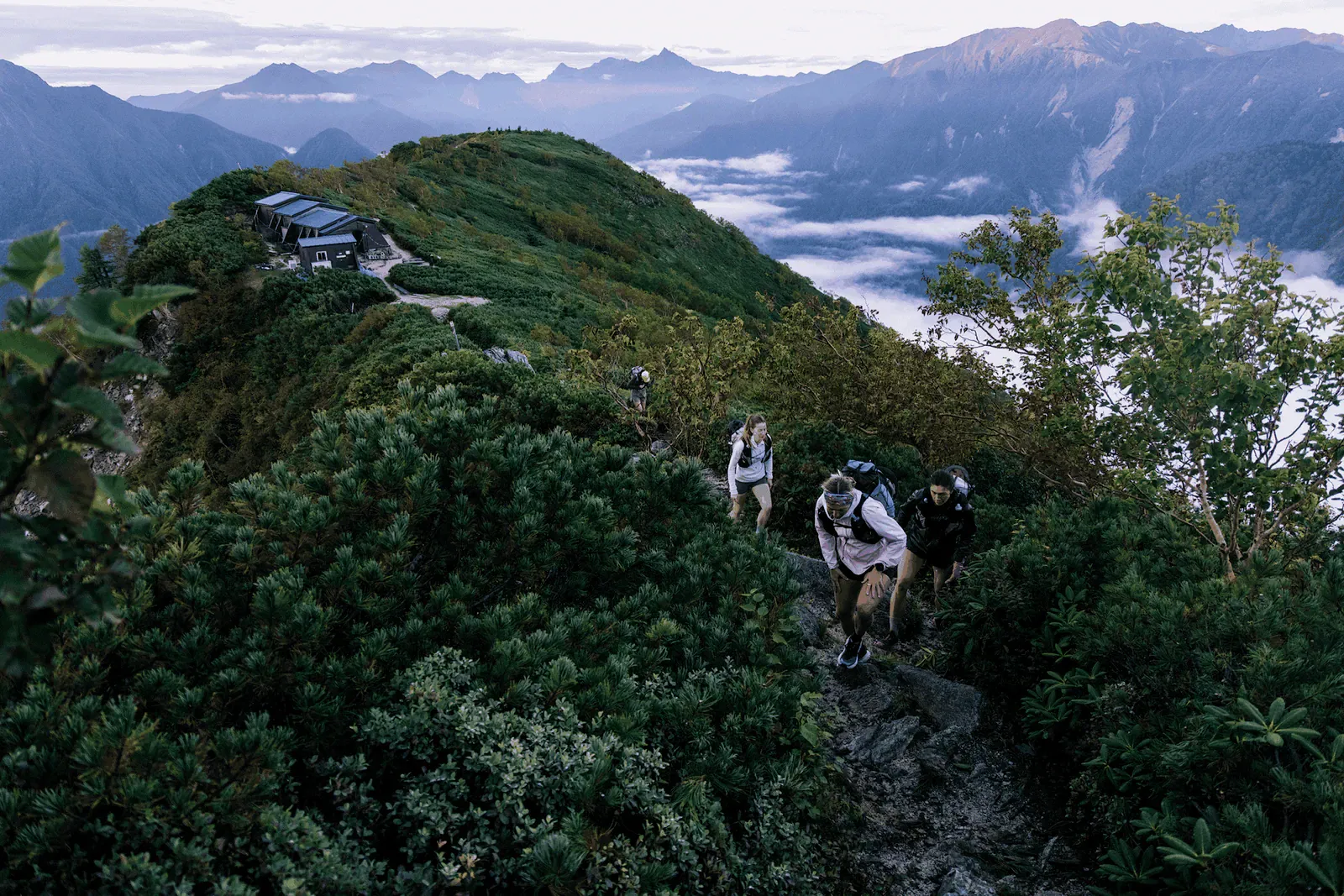
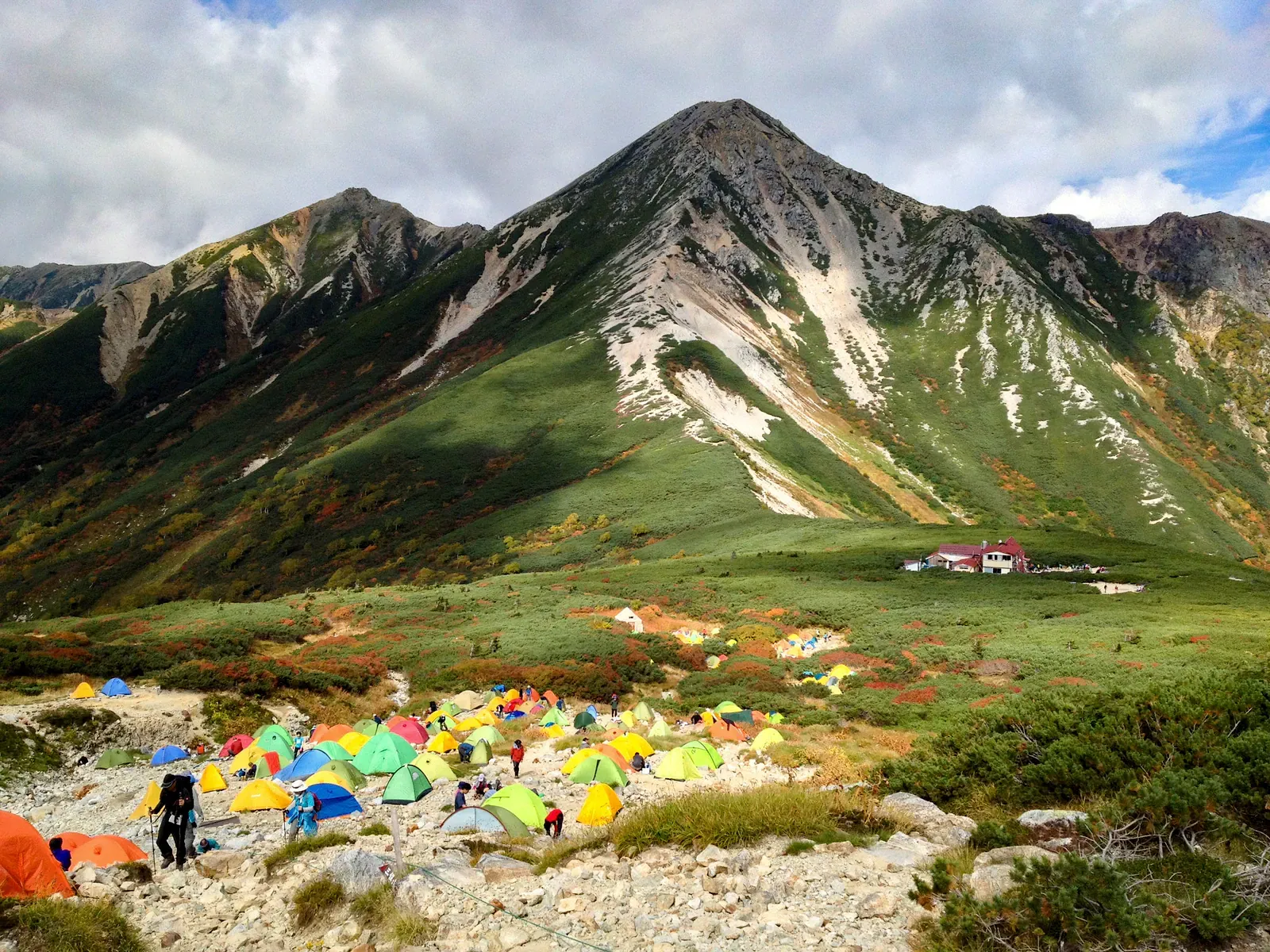
Yarigatake huts. In 2026, Yarigatake Sanso, Yarisawa Lodge and Dakesawa-goya open from 27 April to 3 November, Minamidake-goya and Otenjo-hutte from 11 July to 11 October, and Sessho-goya from 6 June to 11 October. Reservations open one month before arrival, online or by phone, one night per booking. Tents cannot be reserved. An unpaid tentative booking is cancelled after 24 hours, you arrive by 15:00 and you pay cash.
| Stay | 2026 price |
|---|---|
| Two meals | $105 (¥16,000) |
| Three meals | $115 (¥17,500) |
| Room only | $72 (¥11,200) |
| Tent | $13 (¥2,000) |
A secondary guide listed two meals at $90 (¥14,000) in 2025. Cancellation is free more than 21 days out; after that it costs $6 (¥1,000) per person online or $13 (¥2,000) by phone, within 2 days only by phone, and 100% on the arrival day or for a no-show. The 2027 dates and prices are not in our sources. Carry yen: hut toilets are tip-funded at $1 (¥100) minimum per use, per secondary guides.
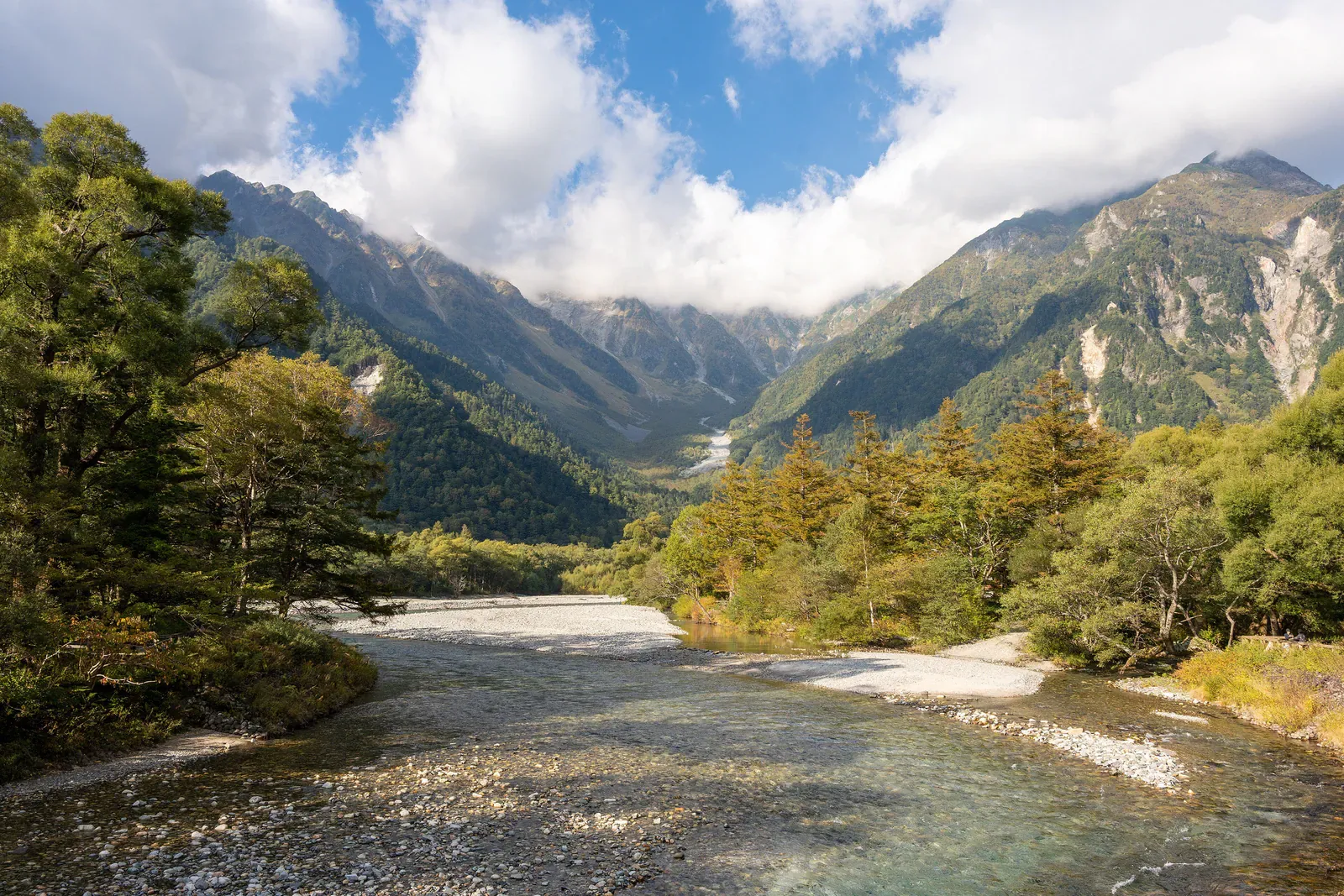
Kamikochi. The season closes in mid-November. Most lodges stop taking guests between 31 October and 14 November. The 2027 dates are not published.
Tateyama Kurobe. The Alpine Route runs from 15 April to 30 November 2026 and is closed from December to mid-April. Snow-viewing trips start on 1 November. A web ticket reserves your boarding time. The Murodo summer bus ran daily from 18 July to 23 August and on weekends and holidays from 29 August to 12 October, bookable up to a month ahead. No 2027 information is published.
Climbing plans (tozan todoke). Nagano has required a plan on designated trails since 1 July 2016, covering the North, Central and South Alps, Yatsugatake, Togakushi, Ontake and others. File online, in the trailhead postbox, by mail or by fax. The prefecture’s page gives no deadline or penalty, and it says the online Compass system is Japanese only, though a Compass page shows an English option.
Toyama’s Tsurugi area runs an ordinance period from 1 December to 15 May. File 20 days ahead and carry the receipt. From 1 December to 15 April, in dangerous zones, you may be asked to cancel or change the plan, and solo climbers are asked to cancel. File on Compass or Toyama’s e-application; Toyama Police says a hiking app’s plan sharing does not replace the filing. Sources conflict on the maximum fine, $325 (¥50,000) or $195 (¥30,000), and Toyama says no penalty has been used in 20 years. A Gifu Prefecture notice, as summarised in search results, requires a filing for the Northern Alps, Yakedake, Ontake, Hakusan and Norikura.
Nagano advises matching the route to your fitness, starting early, turning back when the forecast says so and carrying mountain insurance that covers rescue. Rescue costs and official hiker emergency numbers were not found. More routes are on Climbing the Japan Alps.
Bears: what does the Environment Ministry say?
Bears live in Honshu and Hokkaido, and FY2025 was a record year: 216 incidents, 238 people hurt and 13 deaths, per preliminary Ministry of the Environment figures. A secondary report says Kyushu and Okinawa have no bears. Shikoku is unconfirmed.
The Ministry’s brown bear guidance, from its Shiretoko Rausu Visitor Centre page:
- Make your presence known with claps, your voice or a bell, especially when visibility is poor.
- Take all trash home, never bury it, go in groups (especially at dawn, dusk and night) and check recent sightings first.
- In a vehicle, stay inside and do not stop to watch a bear.
- Never approach cubs, and do not retrieve items a bear has taken.
- If the bear is far away, leave quietly. If it is near, face it, back away slowly and have your spray ready. If it is next to you, stay still.
- Spray at the eyes and nose and discharge the whole can. If a bear attacks, curl up and protect your head and neck.
- Bears hibernate from December to March, and the Ministry notes attacks near dens in eastern Hokkaido in February.
At Shiretoko Five Lakes, the Goko Field House bans feeding, litter, eating, smoking and drones, and you stay on paths. The Ministry’s Rausu Visitor Centre page requires a registered guide on the ground-level Five Lakes path in peak bear season, shown as 10 May to 31 July; the page is undated, so confirm each year. The boardwalk to the first lake is open without a guide.
Safety Bear spray cannot travel in luggage on a plane, so buy or rent it after you land. Check recent sightings before each hike and do not hike alone, as the Ministry advises.
Bear details by region are on Bear safety.
Can I…?
- Can I hike Kumano Kodo or the Alps without booking huts? No for Alps huts, which need reservations; Kumano Kodo lodging fills months ahead.
- Can I dive in Japan without certification? Trial dives need none, and fun dives need a certificate, per operator listings. Regions and months are on Diving by region.
- Can I fish in Japan without a licence? The Japan Fisheries Agency page names no sea-fishing licence, but visitors may fish small-scale only, and a cast net is shore only.
Where next?
The Wild and Trek hub lists every guide. The easiest wild day from Tokyo is Snow monkeys, and February’s ice is on Shiretoko drift ice. For December to March plans, read Trekking in winter.
Quick answers
When can you climb Mt Fuji?
In 2026 the Yoshida trail ran from 1 July to 10 September, Subashiri from 1 July and Fujinomiya and Gotemba from 10 July, all to 10 September. Every trail charged $26 (¥4,000) per climb. The 2027 dates are not published, so 2026 is the last known season.
How do you check a volcano's alert level?
Use the Japan Meteorological Agency volcano page and its English volcanic warnings map on the day you travel. Level 2 means no approach to the crater area and Level 3 means no entry to the mountain. Levels change during a season, so do not rely on a level printed in a guide.
Do you have to file a climbing plan in Japan?
On designated trails in Nagano, yes: filing has been mandatory since 1 July 2016. In Toyama's Tsurugi area the ordinance period runs from 1 December to 15 May, with filing 20 days ahead. Gifu also requires it for the Northern Alps and several other peaks.
When can you see whales in Japan?
Humpbacks ran off Zamami from 8 January to 25 March in 2026 and off Ogasawara from February to April. Rausu has orcas from April to July and sperm whales from July to September. The 2026-27 Zamami dates are unclear right now.
Are bears a risk on Japan's trails?
Yes, in Honshu and Hokkaido. FY2025 set a record of 216 incidents, 238 people hurt and 13 deaths, per preliminary Ministry of the Environment figures. The Ministry advises making your presence known, going in groups and checking recent sightings.