No.02 · Regions
Tohoku travel guide: pick a trip and a season
Snow monsters and Ginzan in winter, festivals in August, leaves in late October. Where to stay, JR East Pass maths, onsen fees and bear alerts, with sums.
Tohoku suits travellers who want snow, hot springs and festivals without Tokyo’s crowds, and who accept long train days to get them. The best-sourced winter trip is four days around Yamagata: Zao’s snow monsters, Ginzan Onsen, then Sendai on the way home, all by rail. Plan 4 to 5 days per trip, because Tokyo to Shin-Aomori alone takes about 3 h 10 min. Ginzan’s 2026-27 rules are a marked draft, and several fees come from secondary guides and say so.
Best for: snow monsters in February, mountain onsen, samurai streets, castle and temple days, August festivals, late-October leaves.
Dollar figures use about ¥155 to US$1 and are rounded; you pay in yen, so check the rate.
Which trip fits you?
Snow and onsen suits winter, the North loop suits a JR East Pass and the Sendai coast suits a first visit.
| Trip | Days | Start from | Season | Best for |
|---|---|---|---|---|
| Snow and onsen | 4 | Yamagata, Zao, Ginzan | Late Jan to Feb | Snow monsters and a soak, no car |
| Sendai coast | 3 | Sendai | Year-round | A first visit, the shortest train ride |
| North loop | 5 | Akita, Hirosaki, Aomori | Feb, or Apr to Oct for full access | Samurai houses, a castle, the JR East Pass |
| Festival week | 3 to 5 | Aomori, Hirosaki, Akita or Sendai | 1 to 8 Aug | Nebuta, Neputa, Kanto, Tanabata |
| Autumn lakes | 2 to 3 | Hachinohe or Aomori | Late Oct | Towada and Oirase colour |
The first three trips have itineraries below.
When should you go?
February for snow, early August for festivals, late April for blossom, late October for leaves. Winter 2026-27 gets the most detail.
| Season | What is on | Crowds | Caveat |
|---|---|---|---|
| Dec to Mar | Zao snow monsters, Yokote Kamakura, Sendai's December lights, Matsushima oysters | Ginzan weekends, Yokote in mid-Feb | Several sights shorten or shut; snow depth and temperature statistics are not found |
| Apr to May | Hirosaki blossom, about 17 Apr to 5 May in 2026 | Hirosaki in late April | Kakunodate blossom timing: not found |
| Jun to Aug | Nebuta, Neputa, Kanto, Tanabata, all in the first week of August | Hotels sell out months ahead | Mid-August can reach 35 C; rainy season and typhoon data: not found |
| Oct to Nov | Towada and Oirase leaves; Matsushima's illumination, late Oct to late Nov | Oirase weekends | Peaks come about two weeks before Tokyo's |
Yokote Kamakura ran on 15 and 16 February in 2025 (one listing says 15 to 17), which gives a typical window. The 2027 dates are unclear right now: check the organiser before you go.
Winter 2026-27 calendar
Zao’s light-up from 26 Dec and Yokote Kamakura in mid-February anchor the winter; most 2027 dates are unconfirmed.
| What | Date and detail | Basis |
|---|---|---|
| Zao ski season | Planned opening 12 Dec 2026, snow permitting | One guide; operator notice unreadable |
| Starlight Pageant | Sendai, Jozenji-dori, free; dates not announced, ran 5 to 28 Dec in 2025 | Visit Miyagi, 2025 run |
| Zao light-up | 26 Dec 2026 to 23 Feb 2027 on 31 nights, 17:00 to 21:00, last ride up 19:45, adult $30 (¥4,600); cancelled in bad weather | One guide |
| Daytime monsters | Jan to Feb: they grow in January, peak in February, thin from March | Visit Yamagata, one guide |
| Oyster Festival | Matsushima, 7 Feb 2027 unconfirmed; usually the first Sunday of February | Matsushima Tourism Association |
| Yokote Kamakura | 12 and 13 Feb 2027, likely, 18:00 to 21:00 | One guide; two others differ |
| Yokote Bonten | 16 and 17 Feb 2027, a rite with a contest about 9:30 to 12:00 | One guide |
The new Yokote days replace 15 and 16 Feb, the date since 1952, as a trial through Feb 2029; confirm on the Yokote city site. Dress for about -4 C. Aizu’s candle festival (early February) and Hirosaki’s snow lantern festival: 2027 dates not found. Zao’s light-up is cancelled in bad weather, so check the light-up nights and the wind warning that day and keep a plan B for a cloudy evening.
August festivals (2026 dates; 2027 mostly unannounced): Aomori Nebuta, usually 2 to 7 Aug, with free standing room along a 3 km route; Hirosaki Neputa, 1 to 7 Aug, parades 19:00 to 21:00; Akita Kanto, 3 to 6 Aug; Sendai Tanabata, 6 to 8 Aug on fixed dates, reported at about 2 million visitors over three days.
Autumn and spring: one guide’s 2026 estimate puts Towada and Oirase leaves at 23 Oct to 5 Nov, north end first, mostly bare by mid-November. Hirosaki’s 2027 blossom dates are unofficial: one listing shows 23 Apr to 5 May.
How do you get there and around?
Every route starts with a Shinkansen from Tokyo Station, and Sendai is the nearest at about 90 to 100 minutes. Times and fares are estimates from a fare lookup site for reserved standard seats.
| Tokyo to | Train | Time | One way |
|---|---|---|---|
| Sendai | Hayabusa | About 90 to 100 min | About $74 (¥11,410) |
| Yamagata | Tsubasa | 2 h 22 min fastest, up to 3 h 05 | About $75 (¥11,670) |
| Morioka | Hayabusa | About 2 h 10 | About $95 (¥14,650) |
| Shin-Aomori | Hayabusa | About 3 h 10 | About $115 (¥17,470) |
| Akita | Komachi | About 3 h 49 | About $120 (¥18,340) |
The slower Yamabiko to Sendai takes 100 to 130 min. Hayabusa and Hayate are all-reserved, and a surcharge is possible in late December and early January, Golden Week and Obon. Akita and Yamagata seats open one month ahead.
From Narita, the Skyliner takes as little as 41 minutes to Keisei-Ueno for about $17 (¥2,580) walk-up, and the Narita Express takes 53 to 60 minutes to Tokyo Station for $20 to $21 (¥3,070 to ¥3,250); Airport to city in Japan compares the links. Haneda to Aomori by air is about 85 min.
Is the JR East Pass worth it?
Only on a long loop. The Tohoku Area Pass ended on 13 Mar 2026, and the JR EAST PASS replaced it the next day: 5 consecutive days for $225 (¥35,000) or 10 days for $325 (¥50,000), children aged 6 to 11 half price, no Green car, foreign passport holders only. It covers JR East Shinkansen (not the Tokaido), limited express, local trains and JR local buses.
| Route | Single fares | Pass |
|---|---|---|
| North loop | Tokyo to Akita plus Shin-Aomori to Tokyo: about $230 (¥35,810), before the Akita to Hirosaki leg | $225 (¥35,000), 5 days |
| Zao and Ginzan | Tokyo to Yamagata plus Sendai to Tokyo: about $150 (¥23,080) | Does not pay |
The pass wins the loop by about $5 (¥810) on the two long legs alone, and that saving exists only if all five consecutive days get used. The rides between Akita and Aomori should come free (their fares are not found). Zao’s bus, Ginzan’s Hanagasa bus and the Towada and Sukayu buses may fall outside it; check each. Whether the pass covers the Narita Express is not found. Check the JR East pass page for the winter 2026-27 fee. National context: What changed in Japan in 2026.
Rail or car in winter?
Rail, unless you drive snow roads often. Snow tyres are legally required on snowy roads, rental firms may refuse customers heading to snowy areas without them, and chains can bar some roads. Book snow tyres early and confirm studless tyres at pickup: Can I rent a car in winter with an IDP? Closures to plan around: the Zao Echo Line (winter), Route 347 to Ginzan (winter; the official page says to avoid prefectural route 29), Hakkoda and Towada roads (late November to April), and Tamagawa for cars (late November to mid-April).
Where should you stay?
Stay in Sendai for a first visit or winter without a car, in Yamagata for Zao and Ginzan, and in Akita or Hirosaki for samurai streets and festivals.
| Stay in | Suits | Day trips | Watch out |
|---|---|---|---|
| Sendai | First visit, short trips, winter without a car | Yokote about 2 h 10; Yamagata by Senzan Line 1 h 21 to 1 h 40; Matsushima and Hiraizumi: times not found | Tanabata and December lights fill rooms |
| Yamagata | Zao, Ginzan, Yamadera | Zao bus about 35 to 45 min; Ginzan via Oishida, about 40 min by train plus 35 to 40 min by bus | Zao and Ginzan buses may sit outside rail passes |
| Akita or Hirosaki | Samurai streets, festivals, castle, the far north | From Akita: Yokote 1 h 20; Kakunodate is a 20 min walk from its own station (Akita to Kakunodate time: not found). Nyuto buses leave Tazawako Station, about 50 min (Akita to Tazawako time: not found). From Aomori: Sukayu bus about 80 min | Akita is 3 h 49 from Tokyo, Aomori 3 h 10; Akita to Hirosaki: not found |
Aizu-Wakamatsu suits history and Ouchijuku; its loop bus to the castle takes about 20 to 25 min. Tokyo to Aizu: not found.
What are the highlights?
Winter hours cut most closing times to between 15:00 and 16:30, so start each sight in the morning.
Snow and winter
| Sight | Fee | Hours | Winter status |
|---|---|---|---|
| Zao ropeway | $28 (¥4,400) return to the snow monsters | 8:30 to 17:00 lower line, 8:45 to 16:45 upper line; last summit return 16:00; arrive before 15:30 | Wind can stop it; check status that morning |
| Hakkoda ropeway | $14 (¥2,200) return | Mid-Nov to Feb: last up 15:40, last down 16:00 | Stops in wind of 25 m/s or more; closed for annual maintenance in early November, check the FAQ |
| Yokote Kamakura | Not found | 18:00 to 21:00 | Mid-Feb; the snow hut room costs $1 (¥100) and closes mid to late Feb |
Hours are from the Japanese page; the English one differs by up to 15 min. Ski season and lift tickets are on the Zao page.
Castles, houses and temples
| Sight | Fee | Hours | Closed or winter status |
|---|---|---|---|
| Hirosaki Castle | Honmaru $2 (¥320); common ticket $3 (¥520) | 9:00 to 17:00, 1 Apr to 23 Nov | Paid areas closed 24 Nov to 31 Mar, when the honmaru is free; tower hours: not found |
| Kakunodate samurai district | Ishiguro $3 (¥400); Aoyagi $3 (¥500); Kawarada $3 (¥500) per a guide; Odano, Iwahashi free | Ishiguro 9:00 to 17:00 all year; Aoyagi 8:30 to 17:00 Apr to Nov, 9:00 to 16:00 Dec to Mar; Kawarada to 16:30 Dec to Mar per a guide | Odano and Iwahashi open mid-Apr to Nov only, 9:00 to 16:30; closed day: not found |
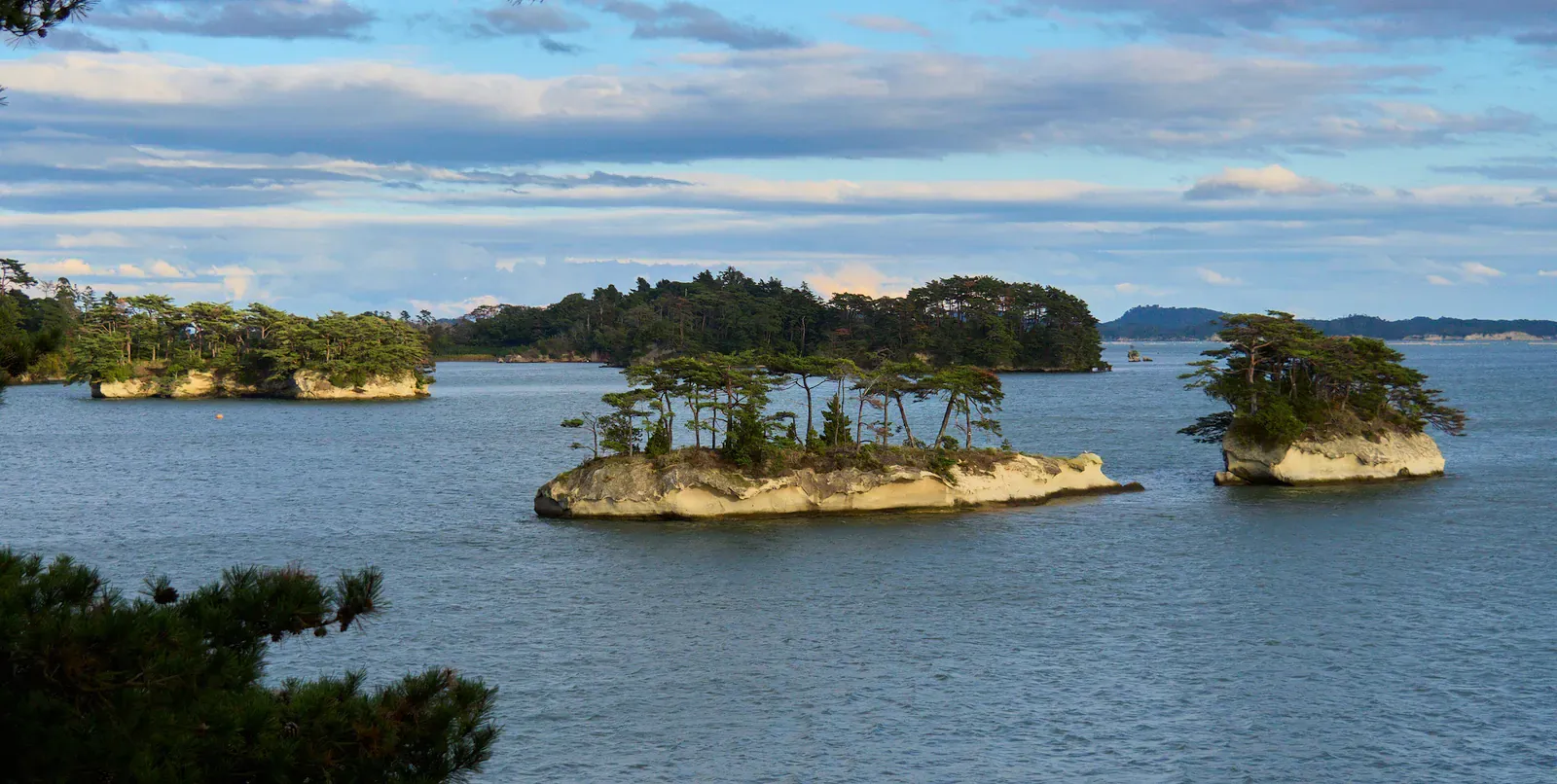
| Matsushima | Zuiganji $6 (¥1,000), up from $5 (¥700) on 1 Apr 2026; Godaido free; cruise of 50 min $10 (¥1,500) | Zuiganji opens 8:30 and closes 15:30 in Dec and Jan, 16:00 in Feb and Nov, 16:30 in Mar and Oct, 17:00 from Apr to Sep, last entry 30 min before; Godaido 8:30 to 17:00 | Zuiganji: no closed days listed, no general reservation |
| Hiraizumi: Chusonji, Motsuji | Chusonji $6 (¥1,000), last known; Motsuji $5 (¥700) | Chusonji 8:30 to 17:00 from 1 Mar to 3 Nov, to 16:30 from 4 Nov to end Feb (Motsuji to 4 Mar) | Chusonji is open year-round with no booking. Motsuji closed days and timed entry: not found |
| Yamadera | $3 (¥500), cash only | 1,015 steps, 30 to 60 min; 8:00 to 16:00 Apr to Sep, to 15:30 Oct and Nov, 8:30 to 15:00 Dec to Mar (the page also says 16:00) | Open Dec to Mar; may close early in bad weather |
| Tsuruga Castle, Aizu | Grounds free; tower $3 (¥410) | 8:30 to 17:00, last entry 16:30 | Open every day |
Samurai castles and history covers Kakunodate’s houses in more detail.
Lakes and the far north
| Sight | Fee | Hours | Season |
|---|---|---|---|
| Towada, Oirase | Hachinohe to Towadako bus $20 (¥3,050), 135 min, 2 a day, reservation required | Buses Apr to mid-Nov | Roads close late Nov to Apr; leaf-season weekends are very busy |
| Osorezan | About $3 (¥500), older sources | 6:00 to 18:00 | Open 1 May to 31 Oct only; fee and dates from older sources, check before you go |
What should you eat?
Tohoku’s signature dishes are gyutan in Sendai, wanko soba in Morioka and kiritanpo in Akita. Prices are thin: each is a single restaurant-level report. Eat well in Japan covers ordering and dietary needs.
| Dish | Where | Reported |
|---|---|---|
| Gyutan | Sendai | Grilled beef tongue; sets reported at $10 to $24 (¥1,500 to ¥3,700) |
| Wanko soba | Morioka | One undated listing shows $27 (¥4,200) at Azumaya Honten; about 15 small bowls equal a regular serving |
| Kiritanpo | Akita | Pounded rice grilled on skewers, with sweet miso or in a chicken and vegetable stew; price not found |
| Yonezawa beef | Yamagata | A 2020 review lists a rice bowl at $16 (¥2,475); steak prices not found |
| Oysters | Matsushima | In season in winter, with all-you-can-eat shacks and lunch cruises; price not found |
Imoni, sansai (mountain vegetables) and the city markets: no price, season or hours found. Book ahead where sourced: Ginzan rooms on winter weekends up to a year ahead, festival hotels months ahead.
Which onsen should you soak in?
Zao’s communal baths at $1 (¥200) are the cheapest soak, and Sukayu’s two-bath ticket at $6 (¥1,000) the dearest on this list.
| Bath | Fee | Hours | Notes |
|---|---|---|---|
| Zao communal baths | $1 (¥200) | 6:00 to 22:00 | No soap, no lockers, no shower; wash with the tub provided |
| Zao Dairotenburo | $5 (¥850) | Closed late Nov to April | Not an option in ski season |
| Ginzan Ooyu | $2 (¥300) | 8:00 to 20:00 | Free for children 12 and under and staying guests |
| Ginzan Shirogane-yu | About $3 (¥500), cash | 8:30 to 16:00, closed Wed per one site | Sources disagree; call the visitor office |
| Nyuto: Tsurunoyu | $5 (¥700) | 10:00 to 15:00 | Open-air bath closed Mon; one 2026 guide says about $4 (¥600); winter access to verify |
| Tamagawa | $5 (¥800) | 10:00 to 15:00 | Closes early Nov to mid-Apr; Shin-Tamagawa stays open; pH near 1; an official park page lists 8:00 to 17:00, so confirm hours |
| Sukayu | One bath $4 (¥600); both $6 (¥1,000) | 7:00 to 17:30 | Women-only Senjin Buro 8:00 to 9:00; closures irregular; winter road restricted |
Naruko Onsen fees: not found. More on Zao’s baths in Zao, and other snow towns in Snow onsen towns.
Plan Ginzan Onsen as an overnight in winter: its official 2026-27 page is a marked draft and the rules are not final. It plans Dec 2026 to early Mar 2027, no cars in town, parking at Taisho Romankan and a shuttle priced by outbound slot: $8 (¥1,300) for 9:00 to 10:40, $6 (¥1,000) for 11:00 to 13:40, $10 (¥1,500) for 14:00 to 18:00. The return bus is assigned about 1 h 20 min later, entry is capped by slot, and the booking link was “being prepared”. Do not walk in from the lot: there is no sidewalk, and blizzards are a risk. The visitor office is on 0237-28-3933.
In 2025-26, 9:00 to 16:00 had no cap, 17:00 to 20:00 was capped at 100 an hour with a reserved ticket and a paid shuttle of about $7 (¥1,150), and after 20:00 only staying guests entered. By rail, Tokyo to Oishida takes about 200 min for about $84 (¥13,000); the Hanagasa bus then takes 35 to 40 min for $6 (¥1,000), about five a day, cash only. Staying in a ryokan covers the overnight.
Tattoos: no official page states a tattoo policy, allowing or banning, for any bath above. Ask first, with a private bath as the fallback: Can I go in an onsen with a tattoo? and Onsen etiquette.
Sample itineraries
The 4-day snow trip costs about $220 (¥33,880), the 5-day North loop with the pass about $260 (¥40,520) and the 3-day Sendai coast about $175 (¥27,020), before the legs marked not found.
A. Snow monsters, Ginzan and Sendai: 4 days, no pass
- Day 1: Tokyo to Yamagata on the Tsubasa, $75 (¥11,670). Bus to Zao, $8 (¥1,200). Communal bath, $1 (¥200).
- Day 2: Zao ropeway, $28 (¥4,400), before 15:30. On a light-up night, the evening ride instead: $30 (¥4,600).
- Day 3: Bus to Yamagata, $8 (¥1,200). Train to Oishida, about 40 min (fare not found). Hanagasa bus to Ginzan, $6 (¥1,000), then the shuttle, up to $10 (¥1,500). Ooyu bath, $2 (¥300).
- Day 4: Bus to Oishida, $6 (¥1,000). Senzan Line to Sendai, 1 h 21 min to 1 h 40 (fare not found). Hayabusa to Tokyo, $74 (¥11,410).
Sum: about $220 (¥33,880) in fares and tickets, before the two fares not found, three nights and meals. The shuttle is counted once, since the draft does not say whether it covers the return. The two Shinkansen legs total about $150 (¥23,080), so a pass loses. Going home from Oishida skips Sendai: about 200 min.
B. North loop: 5 days, JR East Pass
- Day 1: Tokyo to Akita on the Komachi, about 3 h 49 min.
- Day 2: Kakunodate, a 20 min walk from the station: Ishiguro and Aoyagi houses, $6 (¥900). In February, Yokote is 1 h 20 min from Akita.
- Day 3: Hirosaki. The castle’s paid areas are shut 24 Nov to 31 Mar.
- Day 4: Aomori to Sukayu by bus, about 80 min, $9 (¥1,360), plus a winter connecting bus, $3 (¥460). Ropeway $14 (¥2,200), bath $4 (¥600).
- Day 5: Shin-Aomori to Tokyo on the Hayabusa, about 3 h 10 min.
Sum: with the pass, about $260 (¥40,520). On single fares, at least $265 (¥41,330), before the legs between Akita and Aomori. Buses are counted at full fare in both sums. In winter, skip Towada: its buses stop in mid-November.
C. Sendai, Matsushima and Hiraizumi: 3 days, any season
- Day 1: Tokyo to Sendai, 90 to 100 min, $74 (¥11,410).
- Day 2: Matsushima: Zuiganji $6 (¥1,000), Godaido free, cruise $10 (¥1,500). Sendai to Matsushima time and fare: not found.
- Day 3: Hiraizumi: Chusonji $6 (¥1,000), Motsuji $5 (¥700); winter hours end 16:30. Sendai to Hiraizumi time and fare: not found. Back to Tokyo, $74 (¥11,410).
Sum: about $175 (¥27,020), before the two local legs not found. Sendai adds a lodging tax of about $2 (¥300) per person per night from a per-person rate of $39 (¥6,000), per one guide; check the Miyagi page. In December, the Pageant of Starlight is one minute from Kotodai-koen Station.
Rules, safety and costs
Bears are the main risk on Tohoku trails, and lodging tax rates are confirmed only for Sendai and Miyagi, per one guide.
Safety Carry bear spray or a bell on Tohoku trails, and buy or rent the spray after landing because it cannot fly. National guidance has bears active from about March to November and hibernating around December to February. Akita issued a formal alert on 14 Apr 2026 after 75 sightings in two weeks, about 3.4 times 2025, and Iwate issued its first April alert later that month. Hakkoda trails closed for about a month and reopened on 1 Aug 2026; operators there require bear spray or bells. These reports are secondary, and Tohoku winter bear risk has no source.
Bear safety in Japan has the national checklist, and Wild and Trek Japan covers wildlife and trails.
Hikage Onsen in Odate spent more than $6,450 (¥1 million) fencing its outdoor baths.
- Volcanic gas: Zao’s Okama last erupted in 1940. No closure data was found, so check the Japan Meteorological Agency before summer visits.
- Lodging tax: Sendai and Miyagi since Jan 2026, $2 (¥300) a person a night (split $1 (¥100) prefecture and $1 (¥200) city) when the per-person rate is $39 (¥6,000) or more, per one guide; the Miyagi leaflet was unreadable. Hirosaki since Dec 2025, rate not found. Morioka scheduled for Oct 2026, rate not found. Elsewhere: not found.
| Budget item | Cost |
|---|---|
| JR East Pass | $225 (¥35,000) for 5 days |
| Zao lift day | $52 to $58 (¥8,000 to ¥9,000) for an adult, one guide's figure |
| Zao ropeway | $28 (¥4,400) return |
| Ginzan shuttle | $6 to $10 (¥1,000 to ¥1,500), draft |
| Castle, house entries | $2 to $6 (¥320 to ¥1,000) |
Hotel, ryokan and meal prices are not sourced, so the table leaves them out.
To verify Ginzan’s final rules, Zao’s season and light-up fares, Yokote’s 2027 dates and the JR EAST PASS fee for winter are open. Check the Ginzan winter page, the Zao Ropeway page, the Yokote city site and the JR East pass page.
Can I…?
- Rent a car in winter with an IDP? Yes, with a paper 1949 Geneva permit, snow tyres confirmed at booking and chains in the car.
- Use a JR Pass for Tokyo, Hakuba and Kyoto? Yes, and whether it pays depends on your legs.
- Go in an onsen with a tattoo? Depends on the bath.
- Book a private onsen bath? Yes, where the venue offers one; some are for overnight guests only.
- Take a snowboard on the Shinkansen? Yes, within JR East’s size line.
Where next?
- Hokkaido in winter and Nagano in winter are the next snow regions; Kanto and Tokyo is the gateway for every route above.
- North and central Japan temples covers fees and winter hours for Chusonji, Yamadera and Zuiganji.
- Zao snow monsters, Snow onsen towns, Onsen hub, Tokyo to ski resorts and Honshu ski resorts (Appi and Hakkoda) cover snow and baths.
- Passes & prices, Plan the trip, Shrine and temple etiquette and Destinations.
Quick answers
How many days does Tohoku need?
Four days covers one trip: Zao, Ginzan and Sendai, or Sendai with Matsushima and Hiraizumi in three. The far north is a separate loop of about five days, because Tokyo to Shin-Aomori alone takes about 3 h 10 min.
Is the JR East Pass worth it for Tohoku?
Only on a long loop. The 5-day pass is $225 (¥35,000). Tokyo to Akita plus Shin-Aomori to Tokyo is about $230 (¥35,810) in single fares before the Akita to Hirosaki leg, so the pass wins narrowly. Zao, Ginzan and Sendai cost about $150 (¥23,080) in single fares, so the pass loses.
Can I visit Ginzan Onsen as a day trip in winter?
Depends, and the rules are not final. The official 2026-27 page is a marked draft: no cars in town, a park-and-ride shuttle booked by time slot, entry caps and an assigned return bus. Check the official page and the visitor office before you plan, or stay the night.
When is the best time to visit Tohoku?
It depends on the goal. February suits snow monsters, early August the festivals, late April Hirosaki's blossom and late October the leaves at Towada. Many sights shorten or shut from December to March.
Are there bears in Tohoku?
Yes. National guidance has bears active from about March to November and hibernating around December to February. Akita and Iwate issued bear alerts in April 2026. Bear spray cannot go on a plane, so buy or rent it after landing.
Do I need a car in Tohoku in winter?
No for Sendai, Yamagata, Zao and Ginzan, which work by rail and bus. Several roads close from late November to April, and Ginzan bans cars in town. If you drive, confirm snow tyres when you book.