No.04 · Regions
Kansai travel guide: where to stay, when to go, costs
Kyoto for temples, Osaka for food and day trips. Pick a trip and a season, see fares and lodging tax, and check what changed for Kansai rail passes in 2026.
Kansai suits first-timers who want temples, castles and street food on short rail hops, and four to six days does it well. The best months are late March to early April and late November to early December; January and February are colder, quieter and need a closure check. Stay in Kyoto for temples and Gion, or in Osaka for food, cheaper beds and day trips to Nara, Himeji, Kobe and Koyasan. The paper Kansai Area Pass ended on 30 September 2026, so check the operator pages before you buy any rail pass.
Best for: temples and gardens, castles, street food, a temple night, onsen day trips.
Dollar figures use about ¥155 to US$1 and are rounded; you pay in yen, so check the rate.
Which trip fits you?
Kyoto classics suits a first visit and Osaka food a city base; Koyasan night, Castle and soak and Kumano Kodo add a temple stay, a castle with baths or a pilgrimage walk.
| Trip | Days | Start from | Season | Best for |
|---|---|---|---|---|
| Kyoto classics | 4 | Kyoto | Late Mar to early Apr, late Nov to early Dec; quiet in Jan and Feb | Temples, Gion, a Nara day |
| Osaka food | 3 to 4 | Osaka | Year-round; USJ is calmest on weekdays in late Jan and early Feb | Street food, nightlife, day trips |
| Koyasan night | 2 | Osaka, then a temple | Cold with snow Dec to Feb; book far ahead for foliage | A temple stay, vegetarian meals |
| Castle and soak | 3 to 4 | Osaka | Year-round; Himeji is closed 29 and 30 Dec | Himeji Castle, Arima baths |
| Kumano Kodo | 3 or more | Tanabe | Spring and autumn | Pilgrimage walking |
The first three have sample plans below. For Kumano Kodo, the tourism bureau advises booking lodging about six months ahead for spring and autumn, and Can I hike Kumano Kodo without booking? explains the lead times.
When should you go?
Winter is December to February, spring March to May, summer June to August and autumn September to November.
| Season | What is on | Crowds | Caveat |
|---|---|---|---|
| Winter | Kyoto Winter Special Openings, Nara's hillside fire in late January, Arima and Kinosaki baths | Queues from 31 Dec to 3 Jan; calm on weekdays in late Jan and early Feb | Cold; snow is occasional in the cities and likelier at Koyasan and the Kinosaki coast |
| Spring | Cherry blossom: the 2026 best-viewing windows were 29 Mar to 5 Apr in Kyoto, 1 to 7 Apr in Osaka and 29 Mar to 4 Apr in Nara; Miyako Odori in April | Golden Week, about 29 Apr to 5 May | No 2027 blossom forecast until January or February 2027 |
| Summer | Gion Matsuri all July; Gozan Okuribi bonfires on 16 Aug | Obon, about 13 to 16 Aug | Heat means early starts; Kansai rainy-season and typhoon figures are not found |
| Autumn | Foliage; the 2026 forecast puts Kyoto red leaves around 11 Dec | Kyoto, late Nov to the first week of Dec | A forecast, not a date; the Nara deer rut runs Sep to Oct |
What is on in winter 2026-27?
- Winter Special Openings, Kyoto. The 2026 edition ran 9 January to 18 March, usually 10:00 to 16:30 with last entry at 16:00, at $4 to $8 (¥600 to ¥1,200) a site. To-ji’s five-storey pagoda was $8 (¥1,200). The 2027 dates are not found; expect January to mid-March again, unconfirmed.
- Year-end closures. Kyoto City Tourism publishes a closure list as a Japanese PDF. The text of the 2025-26 file could not be extracted and no 2026-27 edition is found, so check the official closure list before travelling between 28 December and 4 January. Himeji Castle is closed 29 and 30 December, and guides report the Osaka Castle keep closed 28 December to 1 January. Last season only, secondary summaries had the Kyoto Imperial Palace shut 28 December to 4 January and Nijo Castle 29 to 31 December; the real Nijo window may be longer.
- Crowds. Hatsumode, the first shrine visit of the year, queues Kyoto and Osaka shrines from 31 December to 3 January. Osaka’s tourism board says Universal Studios Japan needs an Express Pass at New Year and is quietest on weekdays in late January and early February.
- Nara fire festival. Wakakusa Yamayaki, the burning of the Wakakusa hillside, is normally on the fourth Saturday of January. That would be 23 January 2027 by the rule, but the organiser has not published the date. It is free and depends on the weather. It ran on 25 January in 2025 and was listed for 24 January in 2026. The 2027 date is unclear right now: check the organiser, and expect a postponement in bad weather.
- Setsubun and lights. Setsubun is 3 February, with events at Kyoto shrines and no official 2027 schedule found. In 2025 it fell on 2 February, with bean-throwing rites at shrines such as Izumo Oyashiro, so the 2027 programmes are unclear right now: check the shrine or temple. One guide lists Osaka’s Hikari Renaissance for 11 to 25 December 2026; another says mid to late December, unconfirmed.
To verify Todai-ji’s Shigatsu-do hall has been closed since May 2025, and the official page says it reopens on Sunday 17 January 2027. Check the page before you plan around it.
What if you land in early December?
You catch Kyoto’s late peak. The JMC forecast, as reported by an English news site in September and kept in its October revision, puts Kyoto red leaves around 11 December, six days later than average, with ginkgo around 27 November. Osaka is forecast around 4 December for red leaves and 24 November for ginkgo. Wakayama is around 11 December. Nara and Kobe are not in the forecast.
A travel site’s five-year window puts Kyoto’s typical peak at about 22 November to 7 December, densest 29 November to 3 December. Lower sites such as Arashiyama and Eikando come a few days earlier, higher ones such as Kiyomizu and Kurama a few days later. None of this promises a colour on a date.
Summer dates in the table are the usual ones. Gion Matsuri’s two parades fall on 17 and 24 July on the traditional pattern, and the 2027 programme is not out. Osaka’s Tenjin Matsuri is traditionally on 24 and 25 July. In 2025 it ran on those dates, with land and river processions and about 5,000 fireworks on the evening of the 25th. The 2027 dates are unclear right now: check the organiser.
How do you get there and around?
From Tokyo, the Nozomi reaches Kyoto in about 2 h 10 to 2 h 15 for about $92 (¥14,200) reserved. Two fare sites differ by $1 (¥200), so check at booking. The Hikari takes about 2 h 30 and the Kodama about 4 h. Kansai Airport (KIX) has two main rail links:
| Route | Time | Fare | Note |
|---|---|---|---|
| Haruka to Kyoto | 75 to 80 min | About $20 (¥3,060) unreserved, $23 (¥3,590) reserved | About every 30 min; other 2026 guides quote slightly different fares |
| Rapi:t to Namba | 34 min | $5 (¥700) charge plus the base fare | Seats reserved; the charge is $2 (¥300) more if you buy on board |
Rapi:t totals differ by source, from $9 to $11 (¥1,430 to ¥1,670); the itineraries below use about $10 (¥1,490) from one fare site. Reserved Haruka seats are booked on JR West’s WEST QR site, according to a search summary and a university guide. Haruka also calls at Tennoji (about 30 minutes) and Osaka Station (about 45), per a 2025 guide.
From Narita, one older guide puts Kyoto at about 3.5 hours including the Narita Express and Shinkansen, for $105 to $110 (¥16,000 to ¥17,000). A route from Haneda is not found; Airport to city in Japan covers the Kansai links and the Tokyo airports. Osaka to Kyoto takes about 30 minutes by JR special rapid and about 45 by Hankyu from Umeda, per Kyoto City Tourism.
What happened to the Kansai passes?
Pass editions changed on 30 September 2026, so check every line below with the operator before you pay, and price nothing until the operators agree with each other.
- Kansai Area Pass (paper). JR West stopped selling it on 30 September 2026. Passes bought earlier stay valid. The last prices ran from $18 (¥2,800) for one day to $45 (¥7,000) for four.
- Successor. One secondary report names a WEST QR Kansai Area Pass from $17 (¥2,700) to $43 (¥6,700) for one to four days, sold outside Japan only. JR West’s page for it is not found.
- Kansai Thru Pass. Retired. A Kansai Railway Pass replaced it in 2024.
- Kansai Railway Pass Lite. Listed at $34 (¥5,200) for two days and $42 (¥6,500) for three, on private railways and subways only: no JR, no Kyoto City Subway, no Randen tram, no buses. The edition dates conflict. Osaka’s tourism board says an autumn-winter edition runs 1 October 2026 to 31 March 2027, while Kyoto’s page still listed the 25 March to 30 September 2026 edition.
- Kansai WIDE Area Pass. About $77 (¥12,000) for five consecutive days (unconfirmed). It reportedly includes the Sanyo Shinkansen from Shin-Osaka to Okayama and the Kinosaki limited express. JR West’s page did not load.
- One-day passes. Kyoto City Tourism lists foreigner-only Kyoto-Osaka passes, among them Keihan’s at $11 (¥1,650) and Hankyu-Hanshin’s at $10 (¥1,600).
- IC card. An ICOCA card works on JR and private lines, per Osaka’s tourism board.
No break-even is computed for these passes against pay-as-you-go fares. For the national JR Pass, a Tokyo to Kyoto return on the reserved Nozomi plus one Haruka ride is about $205 (¥32,000). That is less than a 7-day pass costs at either price, $340 (¥53,000) at agents or $325 (¥50,000) on the official site for now (see What changed in Japan in 2026), and Nozomi coverage is unclear, so check the JR page for your train. A pass pays only if you add several more long rides.
How do you get around once there?
Kyoto City Tourism’s advice for crowded days: skip JR Kyoto Station, board at Nijo, Enmachi, Tofuku-ji or Yamashina, and switch to the subway, a bus or the Keihan line. The EX100 and EX101 express buses and a luggage delivery service called Hands Free Kyoto are also on its list. A city bus costs about $1 (¥230) a ride, per a volunteer-edited guide.
Cash matters: Kyoto’s tourism site says many purchases and temple admissions can only be paid in cash.
Driving in Kansai and parking in Kyoto are not covered, so there is no car-versus-rail verdict. Rail and bus reach every sight below, with buses for the Kumano trailheads. If you rent anyway, the permit rule and winter tyre advice are in Can I rent a car in winter with an IDP?.
Where should you stay?
Stay in Kyoto for temples and Gion, or in Osaka for food, cheaper beds and airport links; Nara, Kobe and Koyasan suit a night.
| Stay in | Suits | Day trips | Watch out |
|---|---|---|---|
| Kyoto | First-timers, temples, Gion, winter openings | Roughly: Nara 45 min; Arashiyama 15 min; Osaka 30 min; Himeji 1 h by Shinkansen | Dearest beds of the big cities |
| Osaka | Food, nightlife, USJ, cheaper beds, airport links | Roughly: Kyoto 30 min; Nara 35 to 50 min; Kobe 20 min; Himeji 1 h; Koyasan 100 min; Tanabe for Kumano 2 h | Namba is loud |
| Nara | Deer, Todai-ji (hall opens at 08:00 from Nov to Mar), a quiet night | Kyoto or Osaka about 40 to 45 min | Nara lodging prices and tax are not found |
| Kobe | Beef, port, Arima baths | Osaka about 20 min | Only Arima and beef are sourced |
| Koyasan | One temple night | From Namba about 100 min | Cold, snow Dec to Feb, curfew near 21:00 |
Times from Kyoto and Nara are general estimates, not timetable checks. Osaka’s come from Kyoto City Tourism, a volunteer-edited guide and Nankai, and the Koyasan time includes a change at Hashimoto.
Money decides between the two big cities. A hotel-data report puts Kyoto’s average daily room rate in May 2026 at $295 (¥45,700), the highest of the big cities, against $180 (¥27,900) in Osaka, about 40% lower. In Osaka, guides pick Namba (Dotonbori and nightlife) for a first visit and call it the noisiest; Tennoji is cheaper and quieter per guides, and the Haruka stops there.
What are the highlights?
Universal Studios Japan at about $54 (¥8,400) and Himeji Castle at $16 (¥2,500) are the dearest entries here. Fees are adult, tax included, and can change; check the official page.
| Theme | Sight | Fee | Hours and closed day | Booking and winter |
|---|---|---|---|---|
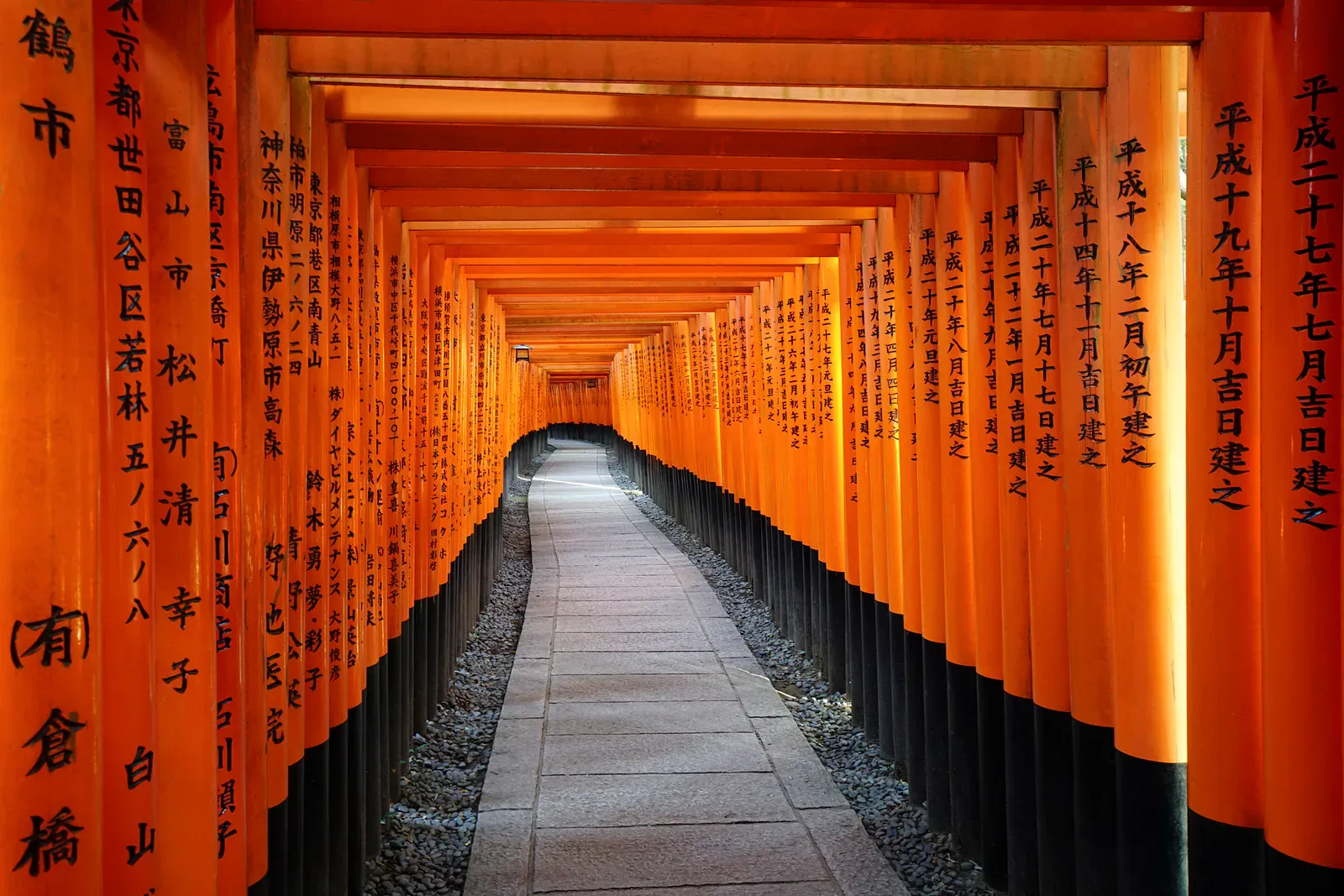
| Kyoto | Fushimi Inari Taisha | Free, reported | Grounds reported open 24 h; the official site gives no hours | No booking; hatsumode queues 1 to 3 Jan |
| Kyoto | Kinkaku-ji | Not confirmed; a search snippet of its site shows $3 (¥500) | 09:00 to 17:00 per the official FAQ; closed days not stated | No booking; no night illumination found |
| Kyoto | Kiyomizu-dera | Regular fee not found | Opens 06:00; closing time varies by season | Night viewing in 2026: 27 Mar to 5 Apr, 14 to 16 Aug and 21 to 30 Nov; 2027 dates not announced |
| Nara | Todai-ji Great Buddha Hall | $5 (¥800); museum $5 (¥800); joint ticket $8 (¥1,200) | Hall 08:00 to 17:00 Nov to Mar; museum 09:30 to 17:00, last entry 16:30; closed days not stated | No booking |
| Castle | Himeji Castle | $16 (¥2,500), 18 and over; with Koko-en $17 (¥2,600); under 18 free | 09:00 to 17:00, last entry 16:00; closed 29 and 30 Dec | Online tickets exist; shoes off inside |
| Castle | Osaka Castle keep | About $8 (¥1,200) per two guides | 09:00 to 17:00 or 18:00, sources conflict; keep reported closed 28 Dec to 1 Jan; park free 24 h | Official site links web tickets |
| Osaka | Dotonbori and Shinsekai | Free | Public streets, best after dark | No booking |
| Osaka | Universal Studios Japan | From about $54 (¥8,400) for a 1-day pass; price varies by date | Opens 08:00 to 10:00 by season | Super Nintendo World can need an Express Pass naming it, or a free timed ticket from the app that can run out in the first hour; entering before crowd control starts is the third route |
| Mountain | Koyasan (Okunoin, Kongobu-ji) | No grounds fee found; Kongobu-ji fee not found | Okunoin Torodo lantern hall 06:00 to 17:00; grounds hours not found | Temple stay below; snow Dec to Feb |
| Walking | Kumano Kodo | Trail free | Open all year; the Kohechi route is closed in winter | Lodging through Kumano Travel, the bureau's official service |
Arashiyama (bamboo path, Tenryu-ji, Togetsukyo) has no official page read, so its fees and hours are not found. Gion’s public lanes are free to walk (rules below). Gion Corner, a ticketed show with maiko dance and tea ceremony, is covered in Gion: what you may photograph, what you may not. Kyoto temples and shrines and Nara, Osaka, Koyasan and Ise temples and shrines have fees, hours and closed days for each site.
How does a Koyasan temple stay work?
Over 50 temples on Koyasan take guests, and a stay is a night of vegetarian temple food (shojin ryori), futon rooms and an early prayer service. Guides disagree on price: about $65 to $260 (¥10,000 to ¥40,000) per person with dinner and breakfast. No association-wide price list is found. One temple, Fugen-in, lists a two-meal plan from $90 (¥14,000) to $140 (¥22,000) per adult on the association’s booking site.
- Getting there. Nankai’s Koya limited express from Namba carries a $7 (¥1,100) charge, all seats reserved, and the cable car up the last stretch takes about 5 minutes. A rapid express with a change at Hashimoto takes about 100 minutes. A digital World Heritage Ticket costs $32 (¥4,910) with the limited express, including the return train and a two-day bus pass, or $26 (¥3,980) without.
- Day. Check-in is around 15:00 to 17:00 and dinner around 17:30 to 18:00. The morning prayer is early, often before sunrise. A common curfew is about 21:00, so ask your temple.
- Rules. Guides list shoes off in buildings, modest clothing, quiet in halls and gardens, and following the monks’ instructions at meals and ceremonies. Photo and tattoo rules are not found; ask when you book.
- Winter. It is colder than Osaka and snows from December to February. Pack layers. Koyasan temple stay has booking steps and one temple’s terms.
Kumano Kodo
The Tanabe City Kumano Tourism Bureau runs the official booking system for lodging, tours and luggage shuttles. The Ohechi route is closed between Wabuka and Tako stations from 8 June 2026 to an estimated 30 April 2027. Extra Kumano Kodo Express and Onsen Extra buses run from 19 September to 10 December 2026, and schedules thin after that. Tanabe to Hongu takes 90 to 115 minutes for about $14 (¥2,100), with two to five runs a day per a Wakayama guide read through search. No winter timetable is found. From Shin-Osaka, the Kuroshio limited express reaches Kii-Tanabe in about 2 hours; reserve in peak weeks. Kumano Kodo booking covers the reservation system.
What should you eat?
Osaka street food costs $1 to $10 (¥100 to ¥1,580), and Kyoto kaiseki runs from $32 (¥5,000) a person. Only these dishes have a price behind them.
| Dish | Price | Note |
|---|---|---|
| Takoyaki (Osaka) | $4 to $6 (¥650 to ¥960) for 8 pieces at two shops in one street-food guide | A general range is $3 to $4 (¥400 to ¥600) a portion |
| Okonomiyaki | $5 to $8 (¥700 to ¥1,200) | One well-known shop lists its standard at $10 (¥1,580) |
| Kushikatsu | $1 to $2 (¥100 to ¥250) a skewer | |
| Yudofu (Kyoto) | Lunch sets $23 to $26 (¥3,630 to ¥4,000) | Tofu in a light broth, found most easily in Kyoto; prices from single restaurants near Nanzen-ji |
| Kaiseki (Kyoto) | Listings run $32 to $325 (¥5,000 to ¥50,000) a person; Michelin-starred about $97 to $130 (¥15,000 to ¥20,000) | Aggregator listings, so treat as a range |
| Kobe beef | Butcher-cafe cutlet $6 to $13 (¥1,000 to ¥1,999); an old steak-dinner figure starts near $42 (¥6,500) | Low confidence; fine dining costs far more |
Michelin-level tables in Kyoto often need booking several months ahead, and some Gion places fill a year within days. Nishiki Market is a lane of about 400 metres between Teramachi and Takakura, and the official site asks visitors not to eat while walking. Nishiki and Kuromon hours are not found; one 2025-26 guide says Nishiki stalls are typically closed 29 December to 3 January. Eat well in Japan, Japan food markets, Okonomiyaki: Osaka vs Hiroshima and Kobe beef and wagyu cover the dishes in more depth.
Where can you soak?
Arima, near Kobe, and Kinosaki, on the Hyogo coast, are the two sourced baths: Kin no Yu at $5 (¥800) and a Kinosaki pass at $10 (¥1,500).
| Bath | Fee | Hours and closed day | Tattoo wording |
|---|---|---|---|
| Kin no Yu | $5 (¥800), $4 (¥650) on weekdays per the page wording; two-bath ticket with Gin no Yu $8 (¥1,200) | 08:00 to 22:00, last entry 21:30; closed the 2nd and 4th Tuesday and 1 January | Not found on the official page; secondary sources conflict |
| Kinosaki pass | $10 (¥1,500), children half; a single bath is about $5 (¥800), cash only | Most baths 07:00 to 23:00; Mandara-yu and Yanagi-yu open at 15:00; each bath has a weekly closing day | The town's tourism site says "All Tattoo Friendly", its own wording. Ask the bath before you go |
Kin no Yu is in Arima, part of Kobe, about 60 to 75 minutes from Osaka by train via Sannomiya, or 50 minutes by Hankyu bus from Shin-Osaka for $8 (¥1,250), per guides. Gin no Yu’s own fee and hours are not on the page read. Kin no Yu is open on holidays and closed the next day. The Kinosaki pass covers its town’s baths.
Kinosaki’s closing days differ between sources, so check the town’s page on the day. Kono-yu was listed as closed for renovation from 11 May to 30 October 2026; confirm that it has reopened.
Kyoto adds an onsen tax of $1 (¥150) a person a night when a bath is part of your stay, and $1 (¥100) for day use. Kinosaki Onsen has each bath’s closing day. Rules, tattoos and private baths: Onsen etiquette, Tattoos and onsen and Private onsen.
What do sample itineraries look like?
Kyoto classics costs about $66 (¥10,300), Osaka and Koyasan about $115 (¥17,490) before the temple night, and Castle and soak about $78 (¥12,080). Costs cover rail, admissions and any stay named, not beds in cities or meals.
Itinerary 1: Kyoto classics, 4 days, staying in Kyoto
- Day 1: Haruka from KIX to Kyoto, 75 to 80 minutes, $23 (¥3,590) reserved. In the evening, walk Gion’s public lanes (rules below).
- Day 2: Fushimi Inari early, free. Kiyomizu-dera opens at 06:00.
- Day 3: Nara. Kintetsu’s limited express takes about 35 minutes for $7 (¥1,160) each way, from a volunteer-edited guide; the JR Nara line is the alternative. Todai-ji’s hall opens at 08:00 from November to March (07:30 from April to October) and costs $5 (¥800). Deer are in the park.
- Day 4: Kinkaku-ji from 09:00, then Arashiyama. In January to March, add a Winter Special Opening at $4 to $8 (¥600 to ¥1,200). Haruka back to KIX, $23 (¥3,590).
Sum: two Haruka rides $46 (¥7,180), Nara return $15 (¥2,320) and Todai-ji $5 (¥800) come to $66 (¥10,300). That excludes Kinkaku-ji and Arashiyama, whose fees are unconfirmed, and any special opening.
Itinerary 2: Osaka and a Koyasan night, 5 days, staying in Osaka
- Day 1: Rapi:t from KIX to Namba, 34 minutes, about $10 (¥1,490). Dotonbori for takoyaki and okonomiyaki.
- Day 2: Universal Studios Japan, from about $54 (¥8,400); buy ahead.
- Day 3: Koyasan. Nankai limited express from Namba, then the cable car. World Heritage Ticket $32 (¥4,910). Temple night.
- Day 4: Morning prayer, back to Osaka. Osaka Castle, about $8 (¥1,200), keep closed 28 December to 1 January.
- Day 5: Half a day in Kyoto, about 30 minutes by JR special rapid, then Rapi:t to KIX, about $10 (¥1,490).
Sum: Rapi:t twice, USJ, the Koyasan ticket and Osaka Castle come to about $115 (¥17,490) before the temple night. With a stay in the guides’ $65 to $260 (¥10,000 to ¥40,000) range, the total is about $175 to $370 (¥27,500 to ¥57,500). The Osaka to Kyoto fare is not found and USJ’s price is a floor.
Itinerary 3: Castle and soak, 4 days, staying in Osaka
- Day 1: Rapi:t from KIX to Namba, about $10 (¥1,490).
- Day 2: Himeji. JR from Osaka takes about an hour for $9 (¥1,450) each way, per a volunteer-edited guide. The castle is $16 (¥2,500) with last entry at 16:00; bring socks. It is closed 29 and 30 December.
- Day 3: Arima. Hankyu bus from Shin-Osaka, 50 minutes, $8 (¥1,250) each way. Both Arima baths on the two-bath ticket, $8 (¥1,200). Avoid the 2nd and 4th Tuesday.
- Day 4: Rapi:t to KIX, about $10 (¥1,490).
Sum: two Rapi:t rides $19 (¥2,980), Himeji rail $19 (¥2,900) plus the castle $16 (¥2,500), and Arima buses $16 (¥2,500) plus the baths $8 (¥1,200) come to about $78 (¥12,080). To swap Arima for Kinosaki, add the $10 (¥1,500) day pass and a limited express from Kyoto; its fare and timetable are not checked (about 2.5 hours is a general estimate).
What are the rules, safety and costs?
Kyoto’s lodging tax runs from $1 to $65 (¥200 to ¥10,000) and Osaka’s from nothing to $3 (¥500).
Lodging tax
Kyoto raised its tax on 1 March 2026. It applies to hotels, ryokan and minpaku, per person per night, and excludes meals.
| Kyoto tax | Room price per person per night |
|---|---|
| $1 (¥200) | Under $39 (¥6,000) |
| $3 (¥400) | $39 to $130 (¥6,000 to ¥19,999) |
| $6 (¥1,000) | $130 to $325 (¥20,000 to ¥49,999) |
| $26 (¥4,000) | $325 to $645 (¥50,000 to ¥99,999) |
| $65 (¥10,000) | $645 (¥100,000) and above |
Osaka Prefecture has charged a tax since 1 September 2025, per person per night, on a room fee that includes service and cleaning and excludes meals.
| Osaka tax | Room fee per person per night |
|---|---|
| None | Under $32 (¥5,000) |
| $1 (¥200) | $32 to $97 (¥5,000 to ¥14,999) |
| $3 (¥400) | $97 to $130 (¥15,000 to ¥19,999) |
| $3 (¥500) | $130 (¥20,000) and above |
No current lodging tax is found for Nara, where a 2020 plan of about $1 (¥200) a night was postponed, or for Hyogo, Kobe and Wakayama. Hotel taxes and where to stay compares Kyoto, Osaka, Tokyo and Okinawa. Tax-free shopping changes from 1 November 2026, covered in What changed in Japan in 2026.
Gion and temple manners
Safety Gion is a residential district. Kyoto’s tourism site says not to stop, touch, follow or photograph geiko and maiko without permission, and its Southern Gionmachi flyer lists detention of under 30 days or a fine under $65 (¥10,000) for obstructing a path or stalking. Pulling a hand or clothing can bring up to 6 months in prison or a $3,230 (¥500,000) fine. Some private lanes are reportedly closed to pass-through since April 2024, with a reported $65 (¥10,000) fine on signs; if a lane has one, do not enter.
Obstructing traffic can cost up to $325 (¥50,000), and littering up to $195 (¥30,000) in Kyoto’s 43 beautification areas, which include Arashiyama and Fushimi Inari. Trespass in a restricted temple or shrine area can bring up to 3 years in prison or $645 (¥100,000). Shoes come off inside temple buildings and inside Himeji’s keep. Photos are usually fine on grounds and often banned inside halls; follow the sign. More in Shrine and temple etiquette.
Guides say to feed Nara’s deer only deer crackers (shika senbei), about $1 (¥150 to ¥200) a pack, to skip paper and plastic bags, to avoid teasing deer or touching antlers, and to give males space in the September and October rut. These are guides’ rules; the park foundation’s own rules are not found.
What does it cost?
| Item | Figure | Basis |
|---|---|---|
| Airport to Kyoto | $20 to $23 (¥3,060 to ¥3,590) | Haruka, one fare site |
| Tokyo to Kyoto | About $92 (¥14,200) | Nozomi reserved, one way |
| Bed | Kyoto $295 (¥45,700); Osaka $180 (¥27,900) | May 2026 average room rate, hotel-rate report |
| Lodging tax | $1 to $65 (¥200 to ¥10,000) in Kyoto; none to $3 (¥500) in Osaka | Official pages |
| Temple admission | $5 (¥800) at Todai-ji | Official page |
| Castle | $16 (¥2,500) Himeji; about $8 (¥1,200) Osaka | Official page; two guides |
| Koyasan temple night | $65 to $260 (¥10,000 to ¥40,000) | Guides disagree |
| Onsen | $5 (¥800) at Kin no Yu | Official page |
Can I…?
- Can I photograph a geisha in Gion? Depends: the street yes, the people no.
- Can I use an onsen with a tattoo? Depends on the bath, not the law.
- Can I hike Kumano Kodo without booking? Book ahead in peak seasons: the bureau advises about six months for spring and autumn.
- Can I use a JR Pass for Tokyo, Hakuba and Kyoto? Yes, and whether it pays depends on your legs.
- Can I rent a car in winter with an IDP? Yes, with a paper 1949 Geneva permit, snow tyres confirmed at booking and chains in the car.
Where next?
- Chugoku, west of Himeji.
- Shikoku, across the Seto Inland Sea.
- Nagano, for snow monkeys and onsen.
- Kanto, for Tokyo and the Shinkansen back.
- Japanese history for travellers pairs eras with Kyoto, Nara and Himeji sites, and Samurai castles and history covers the castles.
- Gion: what you may photograph, what you may not, Shrine and temple etiquette, Onsen guide, Staying in a ryokan, Plan the trip and Japan culture.
- Destinations: every region and city.
Quick answers
How many days do you need in Kansai?
Four days covers Kyoto and a Nara day trip. Five or six add Osaka and one of Himeji, Koyasan or an onsen day. The three itineraries below run 3 to 5 days.
What does Kyoto charge for a hotel night in 2026?
$1 to $65 (¥200 to ¥10,000) per person per night since 1 March 2026, by room price: $1 (¥200) under $39 (¥6,000), rising to $65 (¥10,000) at $645 (¥100,000) and above. Osaka Prefecture has charged $1 to $3 (¥200 to ¥500) since 1 September 2025 for rooms from $32 (¥5,000).
Is Kyoto's autumn colour over by early December?
No. The 2026 forecast puts Kyoto red leaves around 11 December and ginkgo around 27 November, and Osaka about a week earlier, around 4 December. Forecasts move and sites at different heights peak days apart, so treat it as a window.
How do I get from Kansai Airport to Kyoto?
Take the JR Haruka: 75 to 80 minutes, about every 30 minutes, about $20 (¥3,060) unreserved or $23 (¥3,590) reserved. For Osaka's Namba, Nankai's Rapi:t takes 34 minutes with a $5 (¥700) charge on top of the base fare.
Is the Kansai Area Pass still sold?
No. JR West stopped selling the paper pass on 30 September 2026, and passes bought earlier stay valid for their period. One secondary report names a QR successor. Check JR West and the private railways before you buy anything.
Can I photograph geisha in Gion?
Depends: the street yes, the people no. Kyoto asks visitors not to stop geiko or maiko, or photograph them without permission, and some private lanes are reportedly closed to pass-through.