Guide - Culture
Japanese history for travellers: ten eras and the places that show them
Ten eras, one turning point each, and the sites that show them, from Jomon pottery to Hiroshima. Pair an era with your route.
Japan’s history is easiest to read on a trip as ten eras, each tied to one turning point and to places you can still visit. Match the era to your route: Nara and Kyoto hold the 8th to 12th centuries, Kamakura the first shogunate, Himeji and Sekigahara the wars that ended in 1600, Tokyo the Edo and Meiji years, and Hiroshima, Nagasaki and Okinawa the 20th century.
Each section gives the story, one surprising fact, what changed for ordinary people and what to see today, and links to the era’s own page. This guide sits in the Culture hub beside the culture guide and the temples and shrines guide.
Japan’s history at a glance
| Era | Years | Turning point | See it today |
|---|---|---|---|
| Jomon and Yayoi | Roughly 14,000 BC to AD 300 | Pottery before farming, then rice arrives | Sannai-Maruyama, Yoshinogari |
| Kofun and Yamato | c. AD 250 to 6th century | Giant keyhole-shaped tombs | Daisen Kofun in Sakai |
| Asuka and Nara | 6th century to 794 | Buddhism, the Taiho Code, a capital at Nara | Todai-ji, Horyuji, Heijo Palace Site |
| Heian | 794 to 1185 | Capital moves to Kyoto; The Tale of Genji | Kyoto National Museum, Byodoin |
| Kamakura | 1185 to 1333 | First shogunate; Mongol invasions | Kotoku-in, Genko Borui |
| Muromachi and Sengoku | 1336 to 1603 | Onin War, then Sekigahara in 1600 | Sekigahara museum, Himeji Castle |
| Edo | 1603 to 1868 | Long peace, sankin-kotai, a city of a million | Edo-Tokyo Museum, Nijo Castle, Narai-juku |
| Meiji | 1868 to 1912 | Restoration, Tokyo as capital, end of the samurai | Tomioka Silk Mill |
| Taisho and Showa | 1912 to 1989 | 1923 earthquake, 1945, the 1964 Shinkansen | Hiroshima, Nagasaki and Okinawa museums |
| Heisei and Reiwa | 1989 to today | 2011 earthquake, 2019 abdication | Earthquake memorials |
Dollar figures use about ¥155 to US$1 and are rounded; you pay in yen, so check the rate.
Read period dates as ranges, because sources start the Jomon, Asuka and Kamakura periods in different years. Check whether a site is original or rebuilt: Heijo Palace, Yoshinogari, Dejima and Shuri Castle’s main hall are reconstructions.
Jomon and Yayoi: pottery before farming
Japan’s story starts with foragers who made pottery before they farmed. The Jomon period runs from roughly 14,000 BC to 300 BC and the Yayoi from about 300 BC to AD 300, and sources start both in different years. Jomon people lived in settled villages such as Sannai-Maruyama and left stone circles and shell middens. Wet-rice farming and metals reached northern Kyushu from the Korean peninsula. Itazuke in Fukuoka is among the oldest known rice villages, and late Jomon paddy traces there blur any clean cut between the periods.
Wait, really? Radiocarbon studies of charred food residue on pottery from Odai Yamamoto I in Aomori give ages of roughly 15,000 to 16,500 years, among the oldest pottery known anywhere. The makers had not yet farmed.
What changed for ordinary people. Jomon life followed the seasons: foraging, fishing, pit dwellings. Yayoi life added paddies, granaries, metal tools and growing rank differences, while hunter-gatherer ways persisted in Hokkaido and north-eastern Honshu. Scholars still debate how much came from migration and how much from local adoption.
See it today. Sannai-Maruyama in Aomori is a large Jomon settlement with a culture centre, part of UNESCO’s “Jomon Prehistoric Sites in Northern Japan” (17 components, inscribed 27 July 2021). The official page lists 09:00 to 17:00 and closure on the fourth Monday of the month; sources conflict on the fee, so check the site. Yoshinogari in Saga is the largest moated Yayoi settlement, about 40 hectares, with reconstructions. Last known: 09:00 to 17:00 (to 18:00 from June to August) and adults $3 (¥460). More: Jomon and Yayoi.
Kofun and Yamato: the age of giant tombs
Giant keyhole-shaped tombs spread across Japan from about the 3rd to the 6th century as a shared elite burial form, and the largest mark the power of the Yamato rulers. The Mozu and Furuichi groups in Osaka date from roughly the late 4th to the late 5th century. UNESCO inscribed the Mozu-Furuichi Kofun Group on 6 July 2019: 49 tombs and the first World Heritage site in Osaka Prefecture. The largest, Daisen Kofun, is 486 m long and officially designated the tomb of Emperor Nintoku, an identification that is not proven.
Wait, really? The Imperial Household Agency, which manages Daisen as a tomb, allowed its first joint dig with a municipality, Sakai City, from October to December 2018. News reports say trenches on the moat embankment found the surrounding ground paved with stones. The mound itself was not excavated.
The tombs imply large labour forces, and clay haniwa figures ringed the mounds.
See it today. The Daisen mound is a forested hill inside a moat; the Agency manages it and you cannot enter. Viewing is from outside, and no fee or hours are known. Sakai City Museum, near Daisen, shows Kofun exhibits: 09:30 to 17:15 (last entry 16:30), permanent exhibits $1 (¥200) for adults, closed Mondays and at New Year. Tokyo National Museum’s Honkan holds haniwa and bronze mirrors (09:30 to 17:00); its fee and closed days: not found. More: Kofun and Yamato.
Asuka and Nara: Buddhism, law and a capital
Buddhism reached Japan through the Korean kingdom of Baekje: the Nihon Shoki says 552, other sources 538, and both dates are doubtful. The Soga clan backed it against rivals, and won. In 701 the Taiho Code set up a law-based state with household registers and rice land allotted by age, sex and rank. The capital moved to Heijo-kyo, now Nara, in 710.
Smallpox swept the country from 735 to 737 and killed many nobles, including all four Fujiwara brothers; estimates of the toll conflict. In 752 the Great Buddha at Todai-ji, ordered by Emperor Shomu, was dedicated. Many accounts link the epidemic to the Buddha, but no source states a cause.
Wait, really? Tree-ring dating of the central pillar of Horyuji’s five-storey pagoda shows the timber was felled in 594, about a century before the traditional early 8th-century date, per a survey from the Nara National Research Institute for Cultural Properties. Felling is not building, so the date marks the timber.
What changed for ordinary people. Farmers were registered, given rice land and owed grain, cloth or local-product taxes, labour and compulsory loans. One 2020 study estimates 30 to 40 percent of peasant income was taken, with enforcement weakening later in the 8th century.
See it today. Todai-ji in Nara: Great Buddha Hall 08:00 to 17:00 from November to March (07:30 to 17:30 from April to October), adults $5 (¥800). Horyuji in Ikaruga: 08:00 to 16:30 from 4 November to 21 February, adults $13 (¥2,000), last known. Heijo Palace Site in Nara has reconstructed halls and gates on the 710 capital site: 09:00 to 16:30, closed Mondays and at New Year. More: Asuka and Nara.
Heian: a court, a capital and a novel
In 794 Emperor Kanmu moved the capital to Heian-kyo, now Kyoto. The short-lived Nagaoka-kyo (784) had suffered the assassination of Fujiwara no Tanetsugu in 785, flooding and fear of the vengeful spirit of Prince Sawara; the reasons are interpretive. Some sources, including the Kyoto National Museum, end the era in 1192.
Kana scripts and court women’s writing flourished, and The Tale of Genji by Murasaki Shikibu belongs to this world. Byodoin’s Phoenix Hall, built in 1053, reflects Pure Land Buddhism. The Taira and Minamoto warrior bands rose, and the Genpei War closed the era. Heian literature is the court’s own voice, so it records aristocrats, not commoners.
Wait, really? The Kyoto National Museum says no autograph by Murasaki Shikibu exists; the text comes from later copies. The best early evidence is her diary, apparently dated 1008, in which the opening chapter is read aloud to the Emperor, per a 1925 translator’s note. The museum says the work is sometimes called the world’s first novel.
See it today. The Kyoto National Museum shows the court’s art in its collection galleries, adults $5 (¥700). They close during special exhibitions and are listed open 22 to 27 December 2026 and 2 January to 22 March 2027. Byodoin in Uji: fees and hours not found; its notices list changed Phoenix Hall interior tours from 16 October 2026. More: Heian.
Kamakura: the first shogunate
Kamakura begins in 1185, when Minamoto no Yoritomo won the Genpei War and installed military governors and land stewards, or in 1192, when he was named shogun; sources use either year. The government sat in Kamakura while the emperor stayed in Kyoto, so Japan had two centres of power (Emperor vs shogun). After Yoritomo died in 1199 the Hojo family held the regency by inheritance and shoguns became figureheads.
Mongol forces under Kublai Khan attacked in 1274 and 1281. Typhoons wrecked the fleets, and the storms were later called kamikaze. The shogunate fell in 1333, strained by warriors who expected land rewards after a defensive war that brought no spoils.
Wait, really? Magazine reports of a University of the Ryukyus survey off Takashima in Nagasaki Prefecture describe a first confirmed Mongol warship in 2011 and a second in 2015, about 200 m offshore in roughly 15 m of water. Chinese pottery of the 12th and 13th centuries dated it.
What changed for ordinary people. Warriors gained rule and land, and local stewards took a cut of farm output. On the Kyushu coast, people were called up for coastal levies and to build the defence wall.
See it today. Kotoku-in in Kamakura holds the Great Buddha: adults $2 (¥300); April to September 08:00 to 17:30, October to March 08:00 to 17:00, last entry 15 minutes before closing; closed days are not stated on its official page. The Genko Borui, the Mongol defence wall, survives in Fukuoka as free outdoor remains at Nishijin, Ikinomatsubara and Imazu; Imazu is the best preserved. More: Kamakura.
Muromachi and Sengoku: from collapse to Sekigahara
Ashikaga Takauji drove Emperor Go-Daigo from Kyoto in 1336 and took the shogun title in 1338, opening the Muromachi period (1338 to 1573). The Onin War of 1467 to 1477 burned Kyoto and shattered shogunal authority, and the Sengoku, or warring states, period began; it runs to about 1600.
In 1582 Akechi Mitsuhide attacked Oda Nobunaga at Honno-ji; Nobunaga died, and Toyotomi Hideyoshi defeated Akechi and took over. Tokugawa Ieyasu became shogun in 1603, and the siege of Osaka in 1615 ended the Toyotomi line.
Wait, really? The US National Park Service says the Battle of Sekigahara, on 21 October 1600, turned on a man who waited. About 80,000 men stood on each side. Kobayakawa Hideaki, who had pledged to Ishida Mitsunari, sat on Mt Matsuo for hours, then near noon sent about 15,000 men against Otani Yoshitsugu’s smaller force. The western army collapsed; the service gives about 30,000 dead, an estimate.
What changed for ordinary people. Peasants stayed armed until Hideyoshi’s Sword Hunt of 1588 disarmed farmers and temples and froze the line between farmer and warrior.
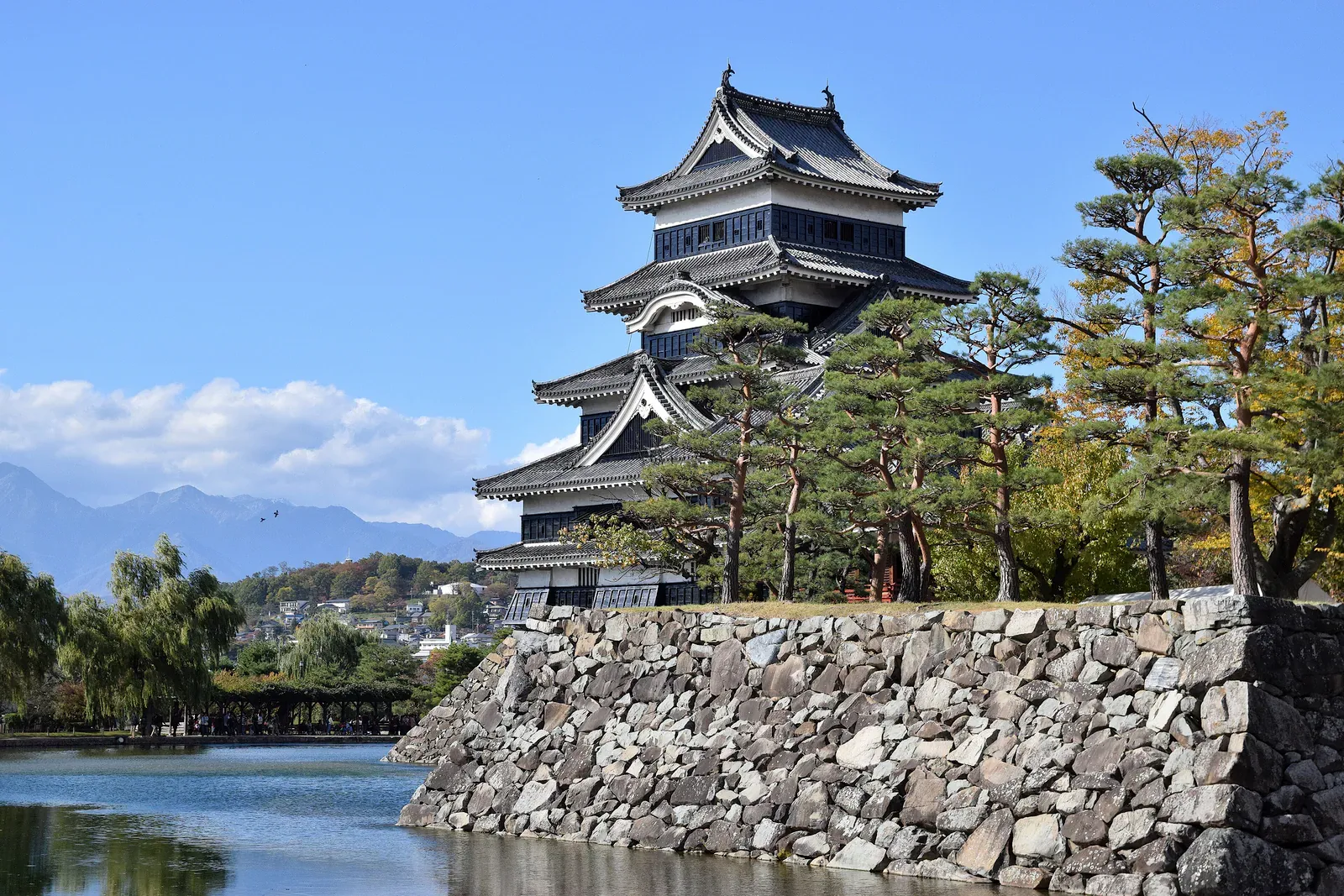
See it today. Sekigahara Battlefield Memorial Museum in Gifu: 09:30 to 17:00 (last entry 16:30), closed Mondays and 29 December to 3 January, 10 minutes’ walk from Sekigahara Station. Himeji Castle, built at this era’s end: adults $16 (¥2,500) from 1 March 2026, 09:00 to 17:00 (last entry 16:00), closed 29 and 30 December. More: Samurai castles and history and Muromachi and Sengoku.
Edo: peace, rules and a city of a million
In 1603 Tokugawa Ieyasu became shogun and made Edo, now Tokyo, the seat of government. The US National Park Service describes the Tokugawa years as 260 years of peace. From 1633 Japanese were banned from travelling overseas, Christianity was banned, and from 1641 the Dutch were moved to Dejima in Nagasaki, the only Western trading partner until 1854. The “closed country” was not fully closed: an academic feature lists four contact points, Nagasaki, Tsushima, Satsuma (for Ryukyu) and Matsumae (for the Ainu).
Wait, really? A travel rule built Edo. Reference works say Tokugawa Iemitsu made sankin-kotai compulsory in 1635: lords alternated between their domains and Edo, and their families stayed in Edo. Some 250 lords kept Edo mansions and travelled in procession along fixed highways, which paid for post towns, inns, roads and a huge consumer city. The same works say Edo passed one million people, samurai included, by the early 18th century.
What changed for ordinary people. Status was set by birth in four tiers, warrior, farmer, artisan and merchant, with movement officially barred. Samurai were about 7 percent of the population and farmers over 80 percent.
See it today. Edo-Tokyo Museum in Ryogoku reopened on 31 March 2026 after about four years, per secondary guides. Its site showed 09:30 to 17:30; sources conflict on the fee and closed days, so check the museum. At Nijo Castle in Kyoto the Ninomaru Palace was the shogun’s Kyoto residence; the official page lists last entry at 16:00. The Nakasendo post towns Narai-juku and Tsumago-juku in Nagano are free to walk, and the Magome to Tsumago trail is 8 to 9 km, about 3 hours (Nagano). More: Edo.
Meiji: the end of the shogunate and of the samurai
Perry’s arrival in 1853 to 1854 ended the seclusion. In 1868 the shogunate ended, the emperor moved to the centre of government and the capital shifted from Kyoto to Tokyo, which was Edo renamed. Domains were abolished in 1871, the first railway (Shimbashi to Yokohama) opened in 1872 and conscription followed in 1873. Samurai stipends ended and sword-wearing was banned in 1876, and the Satsuma Rebellion of 1877 marked the end of the samurai as a class.
Wait, really? Japan changed calendars by skipping days. The National Diet Library records that 2 December 1872 was followed directly by 1 January 1873, so about four weeks vanished. Motives are disputed.
What changed for ordinary people. A compulsory school system began in 1872, surnames became compulsory in 1875, the class system was abolished and topknots were banned.
See it today. Tomioka Silk Mill in Gunma, the 1872 state silk factory, is a UNESCO site (2014). Last known: adults $6 (¥1,000), 09:00 to 17:00 (last entry 16:30), closed 29 to 31 December; the current fee is unclear right now. UNESCO’s “Sites of Japan’s Meiji Industrial Revolution” (2015) include Yawata, Nagasaki and Hagi. More: Meiji.
Taisho and Showa: earthquake, war and recovery
Taisho (1912 to 1926) brought the Great Kanto Earthquake of 1923, after which Tokyo and Yokohama were rebuilt, universal male suffrage in 1925 and a consumer culture often called Taisho democracy. Showa ran 62 years, from 1926 to 1989. Fighting began with the Manchuria incident in 1931, widened into a war in China and became the Pacific War in 1941. The atomic bombings of Hiroshima on 6 August 1945 and Nagasaki on 9 August 1945 came before the surrender announcement on 15 August 1945.
The Allied occupation lasted from 1945 to 1952, and a new Constitution, including Article 9, dates from 1947. The Tokaido Shinkansen opened on 1 October 1964, the year of the Tokyo Olympics, and by 1968 Japan had the second-largest economy.
Wait, really? Reference histories name Hara Takashi, in office from 1918, as Japan’s first commoner prime minister.
What changed for ordinary people. Before the war wages rose and cinema, department stores and radio spread. Wartime meant rationing and mobilisation. After 1945 food was short, land and schooling reform followed, and women could vote from 1946. By the 1960s appliances, the salaryman career and lifetime employment defined urban life.
See it today. Ride the Tokaido Shinkansen (Shinkansen and JR Pass guide). The war-years sites are in the next section. More: Taisho and Showa.
How do museums word the war years?
Museums that cover 1931 to 1945 state dates, numbers and places plainly and attribute each judgement to the institution making it. This guide does the same.
The Hiroshima Peace Memorial Museum states that about 140,000 people had died by the end of December 1945, and calls this an estimate. No Nagasaki museum figure was found, so none is given. The Okinawa Prefectural Peace Memorial Museum says the Battle of Okinawa lasted about 90 days, that more than 200,000 people died and that civilian deaths far exceeded military deaths. The prefecture’s Cornerstone of Peace lists 242,567 names after the 2025 additions, covering people of all nationalities from 1931 to 1945 and the year after. That counts names, not deaths in one battle.
Hiroshima’s museum opens at 07:30 and closes between 18:00 and 20:00 by season. Adults are reported at $1 (¥200). Nagasaki’s museum opens 08:30 and charges adults aged 15 and over $1 (¥200). Okinawa’s museum at Mabuni, Itoman, is open 09:00 to 17:00 (last entry 16:30). At memorials, keep voices low, skip posed photographs at names walls and follow posted signs; this is courtesy, not a posted rule. More: Hiroshima and Nagasaki museums.
Before you go Part of Nagasaki’s permanent exhibition (Section C) is closed for renovation from 24 November 2026 to about March 2027, and Section B stays mostly open. Hiroshima’s museum closes 15 to 20 February 2027 for an exhibit change.
Heisei and Reiwa: disaster, abdication and a new era
On 7 January 1989 the Showa emperor died, and Heisei began the next day; Chief Cabinet Secretary Obuchi Keizo announced the name by holding up the calligraphy. The bubble burst in the early 1990s, beginning what are called the lost decades of low growth. The Great Hanshin earthquake struck Kobe on 17 January 1995. On 11 March 2011 the Great East Japan Earthquake, the tsunami and the Fukushima Daiichi accident struck.
Wait, really? Emperor Akihito’s abdication on 30 April 2019 was the first in about 200 years, per reference works; the previous one was Kokaku in 1817. Reiwa began the next day, 1 May 2019. Chief Cabinet Secretary Suga announced the name on 1 April 2019, and the Embassy of Japan says it comes from the Man’yoshu, the oldest collection of Japanese poetry. The embassy renders it “beautiful harmony”.
What changed for ordinary people. Phones, the internet, convenience stores and vending machines became everyday infrastructure. The population aged and began to shrink, and cashless payment spread. Inbound tourism reached records in 2023 and 2024, helped by a weak yen.
See it today. Memorial museums in Kobe and in Iwate and Miyagi prefectures keep the 1995 and 2011 disasters; hours and fees: not found. More: Heisei and Reiwa.
What are Japanese era names?
Japan counts years in eras, so a ticket, receipt or expiry date may show R8 instead of 2026. To convert, add 1867 to a Meiji year, 1911 for Taisho, 1925 for Showa, 1988 for Heisei or 2018 for Reiwa: 2026 is Reiwa 8 and 1945 is Showa 20. An era can change mid-year, so 2019 was Heisei 31 until 30 April and Reiwa 1 from 1 May.
An era name (nengo) is the official year count. Since Meiji one emperor has meant one era, with the name set by Cabinet order, and the first year is called gannen, not 1. More: Japanese era names.
Where do Ainu and Ryukyu history fit?
Ainu and Hokkaido
Hokkaido was called Ezochi until 1869, when the Meiji government set up a Development Commission and the name Hokkaido. On 6 June 2008 both houses of the Diet unanimously resolved to recognise the Ainu as an indigenous people with their own language, religion and culture. A 2019 act, in force from 24 May 2019, bans discrimination; some commentators note it states no right of self-determination.
“Ainu” means human or people. Upopoy, the National Ainu Museum and Park in Shiraoi, takes its name from “singing together in a large group”. It is open 09:00 to 17:00 from 1 November 2026 to 31 March 2027, and closed Mondays (the next weekday if Monday is a holiday), 28 December to 4 January and 27 February to 8 March 2027. Adults pay $8 (¥1,200), with the museum included. Read more: Ainu history and Hokkaido.
Ryukyu and Okinawa
The Ryukyu Kingdom (1429 to 1879) was unified under Sho Hashi, though some scholars date a centralised state later, and it was a trade and tribute hub linking China, Japan, Korea and Southeast Asia. In 1609 forces from the Satsuma domain invaded; the kingdom kept formal independence and its tribute ties to China. Japan made it the Ryukyu Domain in 1872 and abolished it in 1879, setting up Okinawa Prefecture. The Japanese government calls this the “Ryukyu Disposition”; some scholars call it annexation. Okinawa reverted to Japan on 15 May 1972, with US bases staying.
Shuri Castle’s main hall, destroyed in 1945, was rebuilt in 1992 and burned on 31 October 2019. Its interior opened on 23 November 2026 and admits visitors by timed reservation only: book a date and 30-minute slot in advance, at no extra charge. Adults pay $6 (¥1,000) from that date, per the park’s pages. Read more: Ryukyu and Okinawa.
Where next?
Open the page for one era per leg of your trip. Samurai castles and history gives castle fees and winter status, and Kyoto temples and shrines covers the Kyoto sites. Regions: Kansai, Kyushu, Hokkaido and Okinawa. The rest is in the Culture hub.
Quick answers
How do I follow Japanese history on a trip?
Pair one era with each leg of your route. Nara and Kyoto hold the 8th to 12th centuries, Kamakura the first shogunate, Himeji and Sekigahara the wars that ended in 1600, Tokyo the Edo and Meiji years, and Hiroshima, Nagasaki and Okinawa the 20th century.
Which history sites have dated changes in late 2026?
Shuri Castle's main hall interior opened on 23 November 2026 and needs a timed reservation. Part of Nagasaki's atomic bomb museum is closed for renovation from 24 November 2026 to about March 2027.
Was Japan really closed to the world in the Edo period?
Not fully. From 1633 Japanese could not travel overseas and Christianity was banned, but an academic feature lists four contact points: Nagasaki, Tsushima, Satsuma (for Ryukyu) and Matsumae (for the Ainu). The Dutch were Japan's only Western trading partner until 1854, based at Dejima in Nagasaki from 1641.
How do I read a Japanese era year on a ticket?
Add the era year to a base number. Add 2018 for Reiwa, 1988 for Heisei, 1925 for Showa, 1911 for Taisho and 1867 for Meiji. A ticket dated R8 is 2026. A year can carry two era names, because 2019 was Heisei 31 until 30 April and Reiwa 1 from 1 May.
Who ruled Japan, the emperor or the shogun?
Both, in different ways. From 1192 the shogunate governed from Kamakura while the emperor stayed in Kyoto, and Tokugawa shoguns governed from Edo from 1603. In 1868 the emperor moved to the centre of government and the capital moved to Tokyo.