Guide - Culture
Kyoto tea ceremony, kimono rental and maiko shows: prices and manners
What a tea ceremony and a Gion Corner seat cost, which manners apply in a rented kimono, and how to see maiko at a show instead of on the street.
Book the experience, not the street. A shared tea ceremony at Camellia starts at $26 (¥4,000), a Gion Corner seat costs $35 (¥5,500) for an adult, and no official rule against wearing a rented kimono in Kyoto was found. Kyoto’s requests on photography and on geiko and maiko apply to everyone, in kimono or not.
How does a tea ceremony work for a visitor?
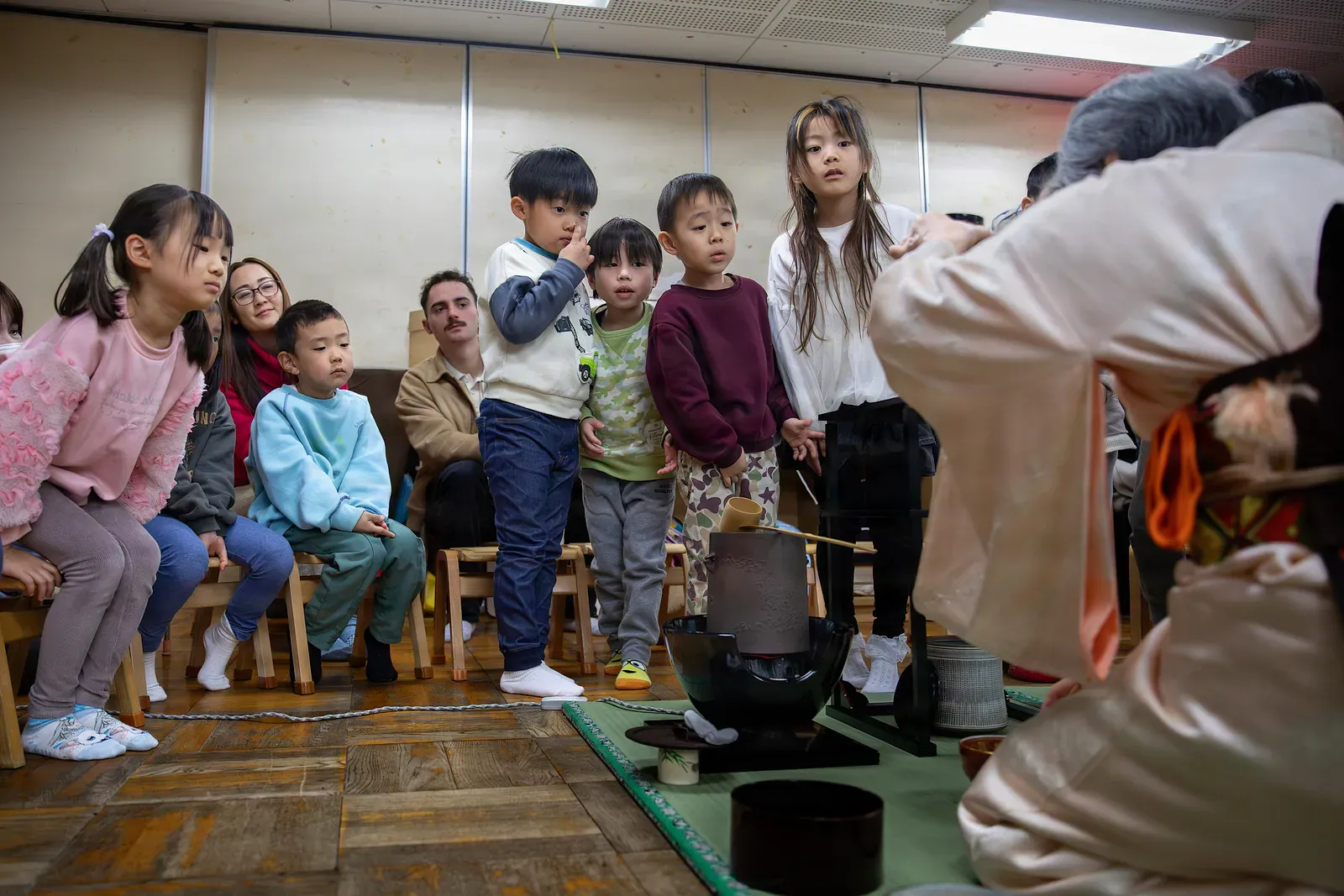
Japan’s national tourism organisation (JNTO) lists the guest steps in one fixed order:
- Remove your shoes and wait in the waiting room. The host greets you with a silent bow.
- Wash your hands and rinse your mouth at the basin.
- Sit seiza, the formal kneeling position, and comment on the scroll and the flowers.
- The first bowl goes to the most important guest. When a bowl reaches you, lift it toward the host, turn it slightly so you avoid its front, sip, and praise the taste and the bowl. Then pass it to the next guest.
- Small sweets are usually served before the second, thinner bowl, which is prepared for each guest.
Secondary guides add that the number of bowl turns differs by school, so follow your host. JNTO publishes no set phrases and no tea school’s visitor page was reached, so no phrases or school-issued guidance are given here.
What does a tea ceremony cost in Kyoto?
Prices run from $10 (¥1,500) for a bowl at Taiho-an in Uji to $97 (¥15,000) per person for a private teahouse. Camellia’s prices are per person and come from its booking pages. The Taiho-an price comes from the Uji tourism association’s page, and the Fukujuen figure from a Kyoto tourism listing.
| Option | Venue | Price |
|---|---|---|
| Garden Teahouse | Camellia, Ryoanji, private, ages 4 and over | From $97 (¥15,000) |
| Flower Annex | Camellia | From $65 (¥10,000) |
| Flower Teahouse | Camellia, Higashiyama | From $52 (¥8,000) |
| Shared adult | Camellia | From $26 (¥4,000) |
| Shared child | Camellia, ages 6 to 12 | From $16 (¥2,500) |
| Kimono add-on | Camellia Flower Teahouse, private | $39 (¥6,000) extra |
| Gion Corner seat | Tea ceremony seat inside a show, any age | $39 (¥6,050) |
| Matcha-making | Fukujuen Uji Kobo, 10:00 to 15:00 | $11 (¥1,650), last known |
| Uji tea house | Taiho-an, Uji City, usucha or sencha | $10 (¥1,500) |
Dollar figures use about ¥155 to US$1 and are rounded; you pay in yen, so check the rate.
Pick by what you need:
- Children: Camellia’s private Garden Teahouse takes ages 4 and over, and its shared child price covers ages 6 to 12.
- An evening: the Gion Corner seat sits inside a one-hour show at 18:00 or 19:00, and the tea there is a demonstration in Urasenke’s standing style.
- A daytime matcha session: Fukujuen Uji Kobo lists 10:00 to 15:00. Taiho-an needs 3 days’ notice for its koicha set and making experiences.
- A kimono: Camellia’s private Flower Teahouse adds one for $39 (¥6,000), and it books online. Its Garden Teahouse has no kimono rental.
The Fukujuen price is an older figure, so its current price is unclear right now.
Before you book Reserve Taiho-an’s koicha set or making experience at least three days ahead. For Gion Corner, check the online ticket page for winter show days before you choose a date.
Can you wear a rented kimono in Kyoto?
Yes: no official rule bars it. What applies is the shop’s own terms and the requests Kyoto makes of every visitor.
Kyoto’s tourism board publishes a list of rental shops (the June 2026 list, read through a search summary). It says:
- Each shop sets its own hours.
- Some shops need an advance reservation.
- The last reception is 1 to 2 hours before closing.
- Some shops offer yukata only in summer.
Arrive more than 2 hours before closing to stay inside the last-reception window.
No official source covers deposits, footwear, return or damage rules, or Asakusa. Ask the shop before you book.
Kyoto’s tourism pages make these requests of every visitor:
- Photography is prohibited in many Gion areas and parts of shrines and temples, and some places ban flash. Check the signs.
- Touch heritage no more than needed, take your shoes off when asked and keep quiet at temples.
- Littering is fined up to $195 (¥30,000) in Beautification Areas such as Arashiyama and Fushimi Inari.
In Gion the lane and road rules apply to you as to anyone. A council member listed rented-kimono tourism among residents’ complaints in 2024, per a news report. Read Geisha and Gion etiquette for the penalty ladder and Temple and shrine etiquette for shoes and photos at temples.
Outside Kyoto, Kabukiza in Tokyo marks 24 January 2027 as Kimono Day, when guests are encouraged to wear kimono to both shows.
How can you see maiko without chasing them?
Buy a seat. Kyoto’s tourism site asks visitors not to stop geiko or maiko on the street for photos and not to photograph them without permission, so a ticketed show is the route where the performers have agreed to be seen. The short answer on cameras is in Can I photograph a geisha in Gion?.
Gion Corner runs a roughly one-hour show with kyomai (Kyoto dance) by maiko, tea ceremony, flower arranging, koto, gagaku and kyogen, plus bunraku and noh by season. Regular shows start at 18:00 and 19:00. The winter programme runs from 1 December to 11 March, leaves out bunraku and noh, and lists a photo with a maiko after the shows. Tickets are on the official e-ticket page.
| Seat | Ages | Price |
|---|---|---|
| Adult | 23 and over | $35 (¥5,500) |
| Youth | 16 to 22 | $25 (¥3,850) |
| Child | 7 to 15 | $21 (¥3,300) |
| Premium | Not stated | $43 (¥6,600) |
| Tea seat | Any | $39 (¥6,050) |
The official page contradicts itself on which winter weekdays shows run. The New Year closure days are in Geisha and Gion etiquette.
Other routes, each with a gap:
- Miyako Odori: a spring dance season held in April at Gion Kobu Kaburenjo. A secondary listing gave 1 to 30 April for 2026, with shows at 12:30, 14:30 and 16:30. No 2027 dates or prices are found.
- Kamogawa Odori: the Pontocho district’s dance season, listed as 1 to 24 May in 2026. No 2027 dates are found.
- Gion Kagai Art Museum: its site reportedly lists its own kyomai performances by geiko and maiko, with tickets at the museum or online. No price is found.
- Ozashiki: a banquet with geiko or maiko. Vendor listings say tea-house access is traditionally by introduction only and that operators sell packages that bypass it. No official page or verified price is found.
Can you do all three in one day?
On the clock, yes: a daytime tea session and an evening show do not overlap. Fukujuen’s sessions run 10:00 to 15:00, and Gion Corner’s shows start at 18:00 and 19:00. Travel time between Uji and Gion is not covered. Camellia’s Garden Teahouse lists session starts from 10:00 to 17:00. Add a rental kimono only once you have the shop’s last-reception time.
Where next?
- Festival dates in Kyoto, including Gion Matsuri: Japan matsuri calendar 2026-27.
- Rules, fines and ticketed shows in Gion: Geisha and Gion etiquette.
- Styles, etiquette and Uji prices: Japan tea ceremony guide, Where to try a tea ceremony and Japanese tea regions.
- Background and the wider picture: the culture guide and the Culture hub.
Quick answers
How much is a tea ceremony in Kyoto?
Camellia's shared ceremony starts at $26 (¥4,000) per adult, and its private Garden Teahouse at $97 (¥15,000) per person. A tea seat at Gion Corner costs $39 (¥6,050), and a bowl at Taiho-an in Uji costs $10 (¥1,500). Camellia's figures are 'from' prices on its booking pages.
Can I wear a rented kimono in Gion?
Yes. No official rule against it was found, and the lane, road and photography rules apply to you as to anyone; photography is prohibited in many Gion areas. Ask the shop about its own terms, because no official source covers deposits, footwear or damage rules.
How much is a Gion Corner show?
An adult (23 and over) pays $35 (¥5,500), ages 16 to 22 pay $25 (¥3,850) and ages 7 to 15 pay $21 (¥3,300). A premium seat is $43 (¥6,600). Regular shows start at 18:00 and 19:00.
How can I see a maiko without chasing one?
Buy a seat at a show. Kyoto's tourism site asks visitors not to stop geiko or maiko for photos and not to photograph them without permission. Gion Corner's programme includes kyomai (Kyoto dance) by maiko.
Are Miyako Odori dates and prices for 2027 out?
Not found. The dance is held in April at Gion Kobu Kaburenjo, and a secondary listing gave 1 to 30 April for 2026.